Desert Online General Trading LLC
Dubai, United Arab Emirates
Desert Online General Trading LLC
Dubai, United Arab Emirates

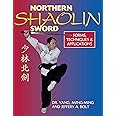
Northern Shaolin Sword: Form, Techniques, & Applications
D**C
Northern Shaolin Sword: Form
I've practice the martial arts for years. However like most people in the martial arts world whom live in the United States and have a family, I have a primary job that takes away 97% of my time. This book is a good refresher and refreshing to read and see the demonstrations within the many photographs taken-which corrected my techniques I was in error of. It also offered new techniques which are a little different yet similar from forms used in Tai Chi. As a person whom studied Both Northern and South Shaolin “influenced or brother” styles in addition to Japanese and Korean when I was younger. I highly recommend this book.
M**9
YMAA Effect
Perfect book for all Martial Artist who want to learn the difficult art of sword. I'm a young french guy and I learn Kung Fu in a YMAA School in France and this good is an add in my training.
J**D
A good work
To begin, I believe that books are an inadequate didactic medium within the martial arts world; only a live instructor can point out the subtleties and variations in the motions of the arts. However, many books, this included, are a valuable resource to practitioners.Although the greater part of the book was very thorough, I have some caveats about those parts which are not as acceptable. The beginning covers a brief history of Chinese swords (mainly of the jian variety). I'm not sure if this is a misconception by the author or a mistake in editing, but some of the pictures misrepresent the weapons they are supposed to illustrate; a slight rearrangement would fix this in most instances, but the fact that they are not arranged properly may result in trouble for the less cautious reader, or for the amateur. I further disagree with some of Yang's descriptions of the jian; the paragraph about the "blood groove" in especial. Although he is a respected martial artist, I maintain that those writers who know little about the weapon itself should write less; knowledge of its use does not, in many cases, signify knowledge of construction/history.Yang does not go into as much detail as I would like in some aspects; the martial merit of some techniques should be explained more deeply. In many cases, he suffices to say that these techniques were efficient and worked, but did not really provide any reason besides vague references to balance or qi.However, I am impressed with the thoroughness with which Yang tackles the subject. He covers basic stances, guards, and attacks, and depicts three very detailed forms (he dedicates approximately 100 pages to the first!). I was also pleased to note that he included the hanzi for many of the terms he uses, although he uses the English translation of the terms throughout the text rather than the Pinyin; e.g. he would refer to the Horse Stance rather than to Ma Bu. As something of a purist, I would rather see the Chinese than the English, but some may prefer the contrary.One last point with which I was pleased was his enthusiasm to warn the reader that his book is NOT a comprehensive manual, and that actual instruction is required to reach any real level of skill in jianshu. I agree with this whole-heartedly. Even though this book is excellent for beginners, no beginner should rely solely on it to attain skill.Overall, a very decent book indeed; certainly worth a look, and a good foundation for building new skills or for refreshing old skills.
L**E
Well done!
I've been training with swords of various types since 1985 and this is the best book I've ever read on the Northern Shaolin (jiang) sword. This straight sword is the toughest to master in the Chinese martial arts. Most practitioners start with the broadsword (dao) and progress to this weapon only after years of diligent practice. Dr. Yang Jwing-Ming is a true master of his art, a fact easily discernable in this fine text even if you have not read his bio. The fundamentals, forms, and step-by-step illustrations are masterfully written, thorough, and illuminating. The san cai jian (three-powers sword sequence), the kun wu jian (Kun Wu Mountain sword sequence) and the qi men jian (Qi family sword sequence)are covered in detail. The overlay arrows really make these static pictures come to life, adding real educational value for the reader. I particularly like the tandem sequences. The solo training techniques are very good as well, particularly the internal power drills. This tome is an outstanding and comprehensive work on the jiang.My only argument with this book is the "blood groove" comment that other reviewers have picked-up on as well. I hate to nit-pick on such a fine work, but that concept is simply wrong. Fullers (grooves) were created to lighten a sword and increase its strength/flexibility. Historically, blades whose primary purpose was to slash (e.g., broadsword) were more likely to be fullered than those whose main use was to thrust (e.g., rapier), simply due to weight. It is not worth downgrading the rest of this excellent text for one bad paragraph though...Lawrence KaneAuthor of Surviving Armed Assaults, The Way of Kata, and Martial Arts Instruction
H**O
Complete, comprehensive guide !!
I found this book is the most comprehensive guide to learn Shaolin Sword. The picture and the explanation are clear and detail. I recommend this book for sword practisioner. I hope someday Dr. Yang will also produce "Southern Shaolin Sword" book.
Trustpilot
Hace 2 semanas
Hace 1 mes