Desert Online General Trading LLC
Dubai, United Arab Emirates
Desert Online General Trading LLC
Dubai, United Arab Emirates

Full description not available
B**N
Vital Reading for Reading Specialists
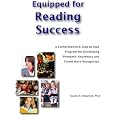
I am a Reading Specialist in an elementary school. Initially, I purchased this book to have in my office as a reference guide in the event I had a student who was not responding to traditional intervention methods. So the book sat in my office for several months until one day I decided to go through it to find some strategy to help me deal with a boy in Grade 3 who was not responding to any of the methods I used to help him decode words. I turned to a chapter towards the end of the book which dealt with reading difficulties. However, the chapter kept referring to previous chapters dealing with a specific topic. So, I flipped back to the previous chapters and started reading. The long and short of this--I picked up the book and began reading it from the first chapter. It took me a while to get through it because it is VERY extensive and covers each chapter supporting it with LOTS of research. By the time I had completed the first chapter, I couldn't put it down. It is by far THE BEST book I have used in my work. In addition to giving support from the research, the author gives concrete examples used in classrooms with lots of suggested activities. The author covers the full spectrum of reading difficulties (word recognition, decoding, fluency, and reading comprehension) and suggests methods and strategies which can be used for each one. I would highly recommend this book to all reading specialists and those who work with struggling students. I have since searched for other books by this author and found them to be just as helpful. Don't hesitate to purchase this book. Well worth the price.
M**O
Wealth of information
I am due to take the ELAR 4-8 exam soon and wanted to learn more about reading difficulties in the classroom and relevant assessment. This is a densely packed book that has summaries and quizzes at the end of chapters to test your understanding of what you’ve read. There are some tables and diagrams included as visual aids. Also, lots of references to research studies which is helpful if you want to follow up particular topics.I am steadily working my way through the book with highlighters and pencil, taking notes in the hope that I can embed some of this wealth of information! A very useful read for any classroom practitioner.
L**D
Great research
I am a first-year special education teacher. My students are K-5; their skills and needs vary greatly from one another. Although I have read quite a bit about the science of teaching reading, I felt like I didn’t know how to help all of my students since they all struggle with different things. I learned so much from this book. I purchased a few books the author recommended, including his own program, a book focusing on vocabulary, and one focusing on comprehension. I now feel much more prepared to support my struggling readers.
A**R
A book all school psychologists should own...and place front and center in their reference materials
Thank you, Dr. Kilpatrick! This text is the best I've read in many years as related to my professional practice. It's wonderfully applicable to school psychologists, which makes sense given his many years as a practitioner. Although I believe it would be a great text specifically to use for graduate-level training of school psychologists in reading theory and assessment, it certainly would help generally with training of educators and parents as well. (They might simply choose to skim over the information about some of the standardized phonological and achievement tests commonly administered by school psychologists.) The author clearly has taken an extensive amount of time to pore over research that most of us would never have had the time or intense drive to look into. What's great to me is how he conveys these findings in clear language. His "simple view" of reading strips away some of the jargony, confusing terms that other representations of reading process include. I'm always on the lookout for parsimony in my practice, and I think his ideas (and those substantiated by the amply-cited research on reading) will more effectively and simply capture what we need to know than other models. Although sharing the neuroscientific depictions of reading process may make you feel smarter in conversation, Kilpatrick nails what will make you feel competent in serving students.
S**N
Research, research, research
This is the book to read if you want to understand reading research without having to pour through thousands of research articles. Due to my job as a reading interventionist at a rural school, I am not familiar with all of the various tests reviewed in the book, but I expect that an educational psychologist likely has access to them and would benefit from the comparisons offered. While this is a research-heavy book, I found myself highlighting information that I could apply practically in the classroom by tweaking programs I'm already using in the classroom. I thoroughly enjoyed this book and am inspired to be a better teacher because of it.
Trustpilot
Hace 1 día
Hace 2 semanas