We remain fully operational. Our teams are working around the clock to ensure your deliveries continue safely.

Descargar la aplicación


Servicios al cliente
Sobre nosotros
Copyright © 2025 Desertcart Holdings Limited
Descargar la aplicación
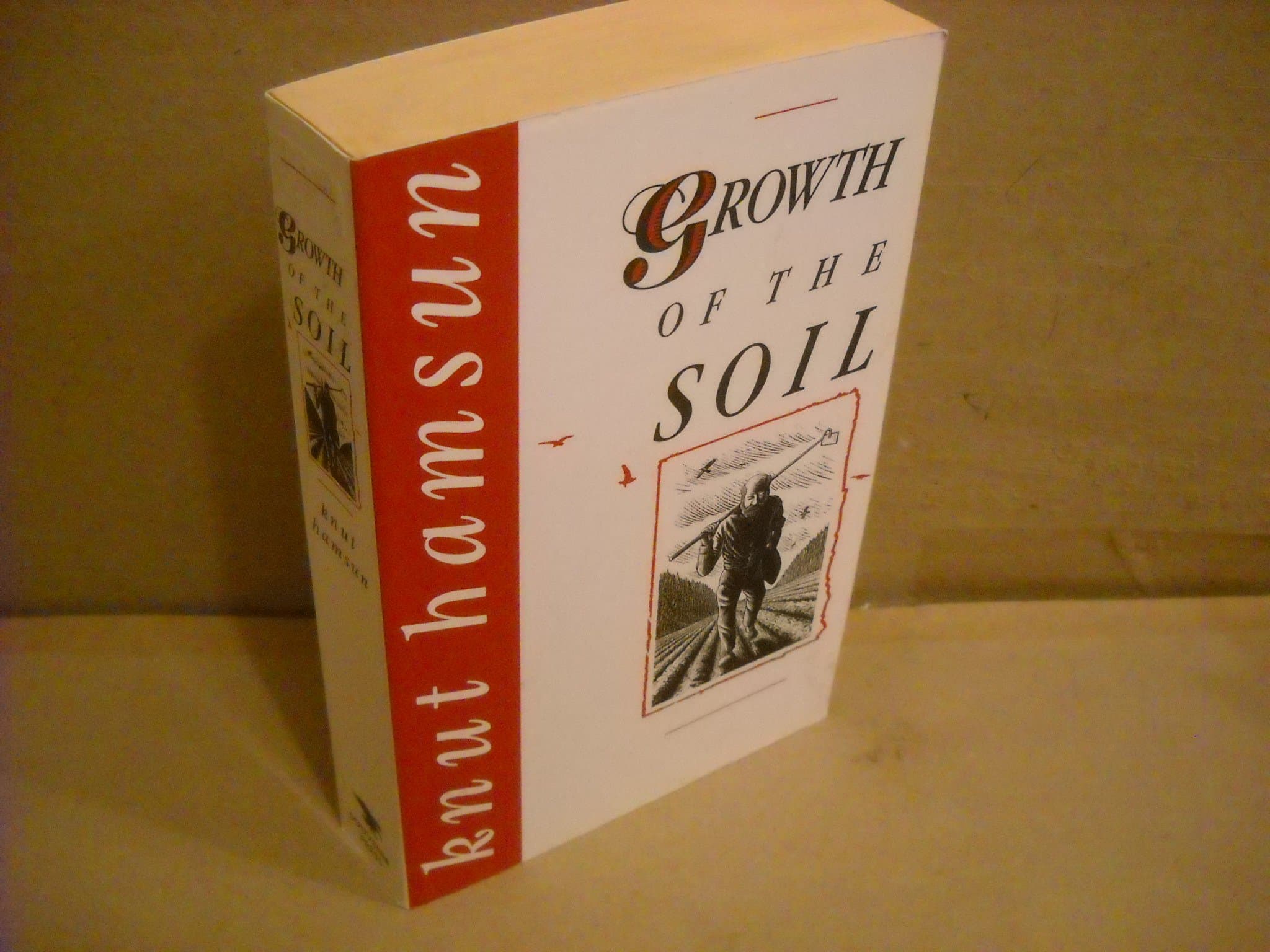
desertcart.com: Growth Of The Soil: 9781440414220: Hamsun, Knut: Books Review: The Once Universal Way of Life - It’s hard to understand different types of human consciousness. If it was easy we’d all be experts in Hegel. But it’s undeniable that consciousness has changed as society has become more literate and technological and governments have become more free. While it’s possible to access some of the earliest civilizations’ kinds of consciousness—one need only, for example, read the Hebrew Bible—Growth of the Soil is at its finest when it portrays what life was like for a farmer and his wife settling untilled land in the far northern part of Norway during the late nineteenth century. Knut Hamsun actually thought that the solution to the problems of the twentieth century was a return to this way of life but that lack of foresight doesn’t diminish from the power of the novel. As it progresses, the nineteenth century catches up with the farmer and one sees the contrast between modern urban life and the more staid ways of the country. To put its themes into words would, unfortunately, be to engage in a number of cliches. But I can guarantee that any reader will come away with a new appreciation for what the first settlers were like—their manners, customs and ways of thinking. I don’t mean to suggest this is an exercise in cultural anthropology. With a slow but steady pace, mirroring the growth of the tilled land, Hamsun introduces a panoply of characters from the Lutheran villages nearby as well as fellow farmers in the Arctic Circle’s wilderness. And these characters have adventures and dilemmas ranging from the tragic to the comical. You couldn’t really even describe a way of life without the necessary drama of human living. But it’s perennial interests comes, not from a great sense of the landscape—which actually is barely described, not from the story arcs and plot twists—though there are many, but from the insight into the manner in which almost all human beings used to live and which turned out to be on the point of almost vanishing (at least in Europe). Because of this unique perspective, I would argue that Growth of the Soil is almost a must read to fellow explorers of the human condition. Review: Hamsun weaves a compelling story of how man and nature should coexist and how we've been led astray - This book is an amazing testament to the way things used (ought..?) to be. In this mythical world Hamsun has created a lone man comes to wild land with a PURPOSE. His purpose is to cultivate and build and inhabit and 'grow' the land into something human, something sculpted, something meaningful. Some people still live this purposeful existence, or try to, in places very remote (there are few left), such as Northern and Western Alaska and Siberia. It's a hard life but also a wonderful one. Few people get to experience it in our modern world. Can you imagine leaving the comforts of your city, suburban, or even semi-country life, and moving out into the middle of the wilderness on your own, constructing your own dwelling, growing crops, and raising livestock? Not for the feint of heart. No one wants to do this kind of thing anymore and it's sad. This is a very powerful way to stay connected to the land and the inhabitants of the land. Hamsun does a wonderful job of illustrating this way of life and it's encroachment by more and more humans as time goes on. Most of the people in the novel don't get corrupted by the influence of the encroaching civilization except one of the main character's sons who goes very astray in a sad (and at times depressing) strain of the story...but he represents all (or many/maybe most) of us. Hamsun is a crafty and thoughtful storyteller. I've also read his book 'Hunger' which is extraordinary and worth reading. Don't be put off by his Nazi sympathies. An artists prejudices and other personality traits/quirks or what have you, should not be confused in most cases with the art they create. You can dislike Hamsun the person and love his work. And you should love his work it's some of the best written material around.
| Best Sellers Rank | #1,200,894 in Books ( See Top 100 in Books ) #7,796 in Psychological Fiction (Books) |
| Customer Reviews | 4.5 out of 5 stars 650 Reviews |
A**S
The Once Universal Way of Life
It’s hard to understand different types of human consciousness. If it was easy we’d all be experts in Hegel. But it’s undeniable that consciousness has changed as society has become more literate and technological and governments have become more free. While it’s possible to access some of the earliest civilizations’ kinds of consciousness—one need only, for example, read the Hebrew Bible—Growth of the Soil is at its finest when it portrays what life was like for a farmer and his wife settling untilled land in the far northern part of Norway during the late nineteenth century. Knut Hamsun actually thought that the solution to the problems of the twentieth century was a return to this way of life but that lack of foresight doesn’t diminish from the power of the novel. As it progresses, the nineteenth century catches up with the farmer and one sees the contrast between modern urban life and the more staid ways of the country. To put its themes into words would, unfortunately, be to engage in a number of cliches. But I can guarantee that any reader will come away with a new appreciation for what the first settlers were like—their manners, customs and ways of thinking. I don’t mean to suggest this is an exercise in cultural anthropology. With a slow but steady pace, mirroring the growth of the tilled land, Hamsun introduces a panoply of characters from the Lutheran villages nearby as well as fellow farmers in the Arctic Circle’s wilderness. And these characters have adventures and dilemmas ranging from the tragic to the comical. You couldn’t really even describe a way of life without the necessary drama of human living. But it’s perennial interests comes, not from a great sense of the landscape—which actually is barely described, not from the story arcs and plot twists—though there are many, but from the insight into the manner in which almost all human beings used to live and which turned out to be on the point of almost vanishing (at least in Europe). Because of this unique perspective, I would argue that Growth of the Soil is almost a must read to fellow explorers of the human condition.
S**.
Hamsun weaves a compelling story of how man and nature should coexist and how we've been led astray
This book is an amazing testament to the way things used (ought..?) to be. In this mythical world Hamsun has created a lone man comes to wild land with a PURPOSE. His purpose is to cultivate and build and inhabit and 'grow' the land into something human, something sculpted, something meaningful. Some people still live this purposeful existence, or try to, in places very remote (there are few left), such as Northern and Western Alaska and Siberia. It's a hard life but also a wonderful one. Few people get to experience it in our modern world. Can you imagine leaving the comforts of your city, suburban, or even semi-country life, and moving out into the middle of the wilderness on your own, constructing your own dwelling, growing crops, and raising livestock? Not for the feint of heart. No one wants to do this kind of thing anymore and it's sad. This is a very powerful way to stay connected to the land and the inhabitants of the land. Hamsun does a wonderful job of illustrating this way of life and it's encroachment by more and more humans as time goes on. Most of the people in the novel don't get corrupted by the influence of the encroaching civilization except one of the main character's sons who goes very astray in a sad (and at times depressing) strain of the story...but he represents all (or many/maybe most) of us. Hamsun is a crafty and thoughtful storyteller. I've also read his book 'Hunger' which is extraordinary and worth reading. Don't be put off by his Nazi sympathies. An artists prejudices and other personality traits/quirks or what have you, should not be confused in most cases with the art they create. You can dislike Hamsun the person and love his work. And you should love his work it's some of the best written material around.
J**S
marvelous in some parts, soporific in others
Growth of the soil Knut Hamsun (Pedersen) The translator gives us a lovely paean to the story: “The story is epic in its magnitude, in its calm, steady progress and unhurrying rhythm, in its vast and intimate humanity. The author looks upon his characters with a great, all-tolerant” eye. And the translator is right about the unhurrying rhythm – it’s a 200-page story told in 350 pages. The story line, the writing style, the characters are stolid: slow-moving but substantial in their depth. In fact, the slow, rhythmic movement of the prose is part of the attractiveness of the writing—the unchanging world of agriculture and of Isak himself: “Look! the tiny grains that are to take life and grow, shoot up into ears, and give more corn again; so it is throughout all the earth where corn is sown. Palestine, America, the valleys of Norway itself—a great wide world, and here is Isak, a tiny speck in the midst of it all, a sower. Little showers of corn flung out fanwise from his hand; a kindly clouded sky, with a promise of the faintest little misty rain.” Part of the slowness is that Hamsun is writing from the point of view of a narrator who rarely sees into his characters. The most conversation we get out of Isak is the occasional “Ha.” As a Minnesotan, I understand this, since we have a lot of Norwegians in our population. We look to the Germans in the southern half of the state for humor and laissez-faire insouciance. Usually, stories have some sort of character arc that animate their plots and draw the reader along. This one has an interesting twist, which I guess one might call the environment arc. The farm, to some degree the people involved with it change and grow, but Isak is a rock-solid constant, “A tiller of the ground, body and soul; a worker on the land without respite. A ghost risen out of the past to point the future, a man from the earliest days of cultivation, a settler in the wilds, nine hundred years old, and, withal, a man of the day.” That is lovely writing, but it also makes for a great deal of repetition and not much movement. Stolid. It was interesting to read, marvelous in some parts, soporific in others.
S**R
elements of a simple life, blood and soil
I had heard of Hamsun's fame as a novelist and infamy as a Norweigian. I picked up this book to examine the fuss. I am not a Norwegian, but I think they should be proud of Hamsun and I do not take his wartime sympathies as any detraction from his literary work at all. History is written by the winners. No I am not a Norwegian, but I am a gardener, and a husband and father however, and the life of my home and hearth follows many of the same slow, steady, fertile rhythms of blood and soil that Hamsun paces in his work. Like other reviewers, I found the work slow yet comforting, just like planting little seeds in black loam and watching them sprout and grow. I did travel to Norway once and on the Sonne fjord I visited a farm, a young but enterprising Norwegian man and his sturdy wife who had a flock of goats they milked to make gjet ost, the delicious brown cheese of Scandanavia, samples of which they served with crepes and ligonberry jam. This was years before I read the book, but my memory of the place and people, the tastes, the look of the water in the fjord and the cliffs above, the smells and sounds of the bleating goats, the ruddy cheeks and blonde hair of the farmer and his wife, all accompanied me throughout my enjoyment of this novel. As an American, whose primary vocation is intensely active and full of interpersonal conflict, I marvel at the peaceful life that many of the good peasant folk of Europe and other nations had in pre-industrial times before globalization and the rest of it. The farming of yesterday was physically hard work but remembering the Benedictine slogan "Ora et Labora" maybe hard work has a place in the life well lived.
R**E
1920 Pulitzer
I gave this as a gift to my adult granddaughter with a child of her own and another on the way. I read this book back in the 70's and just re-read it. Hamsun is an amazing Norwegian writer. One does well to read his other works to fully appreciate his skill. Most reviewers see Growth of the Soil dominated by patient strength and simplicity. All that is a backdrop to the real issue addressed. That is a woman's right to kill her baby. The book was written before 1917 and it would seem Hamsun was a bit ahead of his time although the issue is as old as humanity. His development of the argument is complex and persuasive. His character development is central but maybe difficult to follow for one not immersed at childhood with people from northern Scandinavia. Like two adults, standing in the snow, looking out over a North Dakota field, saying "Ya".
E**Y
Nazi Romanticism
Growth of the Soil by Knut Hamsun is a strange, somewhat off kilter story about Norwegian peasants settling the far north of the country, creating homesteads from wilderness. The main character is Isak, and it is obvious that Hamsun considers him a kind of peasant/messianic character. Halfway through this book I felt some fascist vibes here. I knew nothing about Hamsun, and then found out he was an enthusiastic supporter of Hitler and Nazism. That took the steam out of the book for me. It also explained a great deal about the philosophy exposed in the novel. That aside, it seems Hamsun should have stuck with Isak’s family in the next generation for the second part of the book. He veers away from them, impeding the flow of the novel.
F**R
Puts and Calls
Thirty years have passed since I first read this. A favorite then, and I find that time has not diminished my appreciation for this great novel. This is a story of 'puts' and 'calls' and it has nothing to do with Wall Street. In a way this is the genesis of other stories. ...There is uninhabited land in a northern clime and a man is put amidst it. Isak clears land, tills the soil, constructs buildings. He has a call for a woman and Inger is put there. So too is a cow, then a bull, a goat, and a pig. There is a call for additional buildings and more clearing and tillage. A call for a saw mill. A call for irrigation and an engineer is put there. Children are put in the woman and two of these are sons. Eleseus is of different temperament from Sivert and his father and is called to town, to an office. Copper has been put in the land and Geissler and others call upon the landowner Isak to buy so that it might be extracted. Poles are needed for the telegraph. Neighbors arrive and with it a capitalistic thinking, but in the end it is those who work the soil who are truly lauded; and that all the artifacts that come about with development of towns are merely what they are called and worth only what a man will pay for them, unlike the soil. Isak is well described as 'a barge of a man' because of his size and scope of labor, yes, but also because all that follows in the rest of us might be argued as contained in his life of doings and in those of his wife as well. Before there were thrillers, courtroom dramas, potboilers, and romances, there was literature like this. Thank god, it still lives.
S**K
My First Experience
This is my first experience with Knut Hamsun and at first I was totally bored. But then I got into the rhythm of the book and began to enjoy it. It's about a man, Isak, who appears in the wilds and begins to carve out a farm. He marries a woman with a harelip named Inger. Through the ebb and flow of a simple, hard working life, Isak is able to carve out an existence and survive. Over the years he goes beyond existence and begins to enjoy prosperity. Along the way Inger gives him 2 sons but she smothers their 3rd child, a little girl born with a harelip. Inger decides, on the spot, that she knows best how to handle the situation and her answer is to murder the child. Her cousin, Oline, figures out what she's done and Inger is sent to prison for 8 yrs. Oline moves in with Isak and his 2 sons while Inger is gone and keeps the household together. But Oline is much like Les Miserables' Inspector Javerts. She's the letter of the law but not the heart of it. She's malicious and manipulative to her own advantage. Inger's time in prison somehow turned into working in town and was hardly hard time. I didn't understand that. When she came home she felt like she was better than everyone else because she had lived 8 years in town and "she done got uppity". Where was the shock that someone would murder the baby they gave birth too? And Inger was not the only one. Another character, Barbro, becomes the servant of a young man named Axel. He has a farm not far from Isak and Inger. Barbro soons becomes pregnant by Axel and Axel gives her a silver ring to indicate he's willing to marry her but Barbro isn't interested in marrying Axel. As soon as the child is born, she drowns the baby. And Axel finds out this isn't the first time Barbro has killed her own child but he still loves her. And Barbro doesn't stop with 2 murders for her own convenience and Axel doesn't stop being her enabler. To me, the truly good characters were Isak and his son, Sivert. All the other characters have their dark side. The narration of the story is as dispassionate as Nature itself without judgment for or against actions made by the characters that people the village and wilds of Norway. It's a very good representation of the hard life that people of the land had and the harsh realities of life before our modern technology changed all that. How hard it must have been to not only survive but to succeed in those days. I recommend this book.
Trustpilot
Hace 2 semanas
Hace 3 días