We remain fully operational. Our teams are working around the clock to ensure your deliveries continue safely.

Descargar la aplicación


Servicios al cliente
Sobre nosotros
Copyright © 2025 Desertcart Holdings Limited
Descargar la aplicación
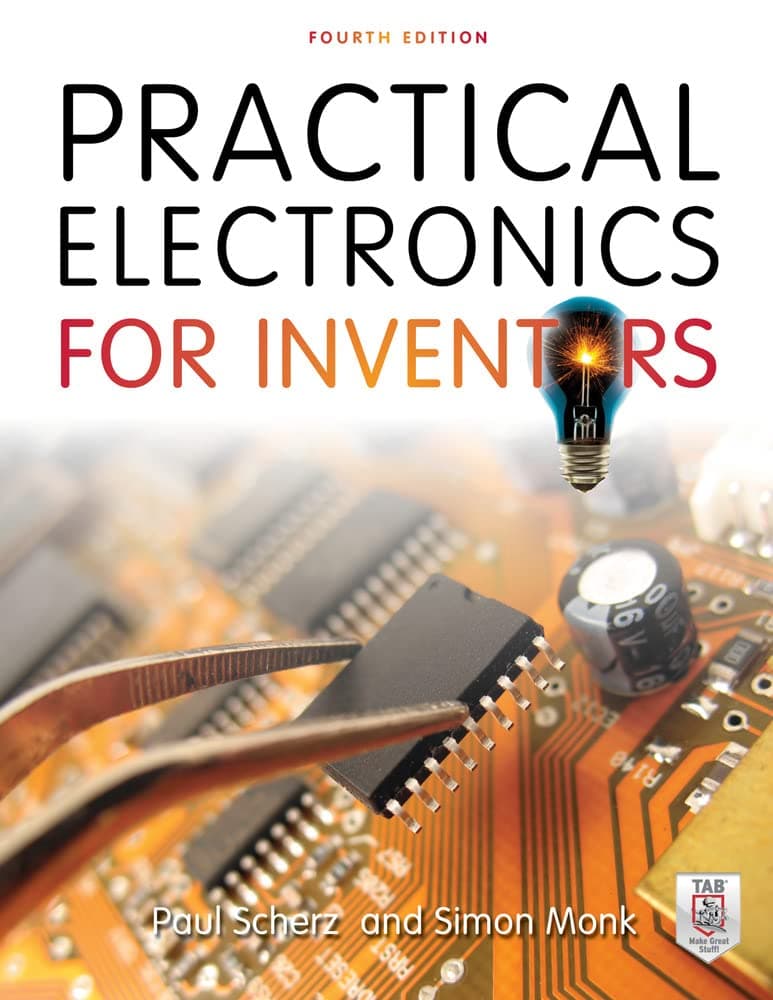
Practical Electronics for Inventors, Fourth Edition [Scherz, Paul, Monk, Simon] on desertcart.com. *FREE* shipping on qualifying offers. Practical Electronics for Inventors, Fourth Edition Review: A must have for hobbyists, students, and amateurs... - This is a book that regardless of where you are on your learning path, or where you intend to go, if you are dealing with electronics in any capacity you need this book on your shelf. It doesn't matter if you are designing circuits, lighting a scale model, building custom PCs, a HAM, or figuring out an electrical glitch in your car, this is a wonderful reference to have on hand. Even if you're a student just starting out, this is still a book you want to get sooner or later, preferably sooner to act as a supplement to your studies. The book covers a tremendous amount of ground and gives a great overview from the basics through micrcontrollers. Likewise, this book does cover the laws and theorems of basic theory along with the math involved. In fact the first 1/4 of this book is spent just covering theory. From there it goes into the various components and how they work, circuit design, all sorts of references on how components are labeled, and more. So what exactly is this book then? It's somewhere between a glossary of electrical components and an encyclopedia. At least that's how I would describe it. The explanations are clear, concise, and I find the book overall easy to follow. Unfortunately there is nothing in the way of labs, quizzes, hands-on work, worksheets, etc. In other words, no way to interact with the material. It does offer good (if dated) advice on how to set up a lab, how to interpret readings on test equipment, where to go for supplies, and more along those lines. That's why I HIGHLY recommend this book as a supplement to either as an existing course or program, or as a reference to a hobbyist that is already active in the field. Can someone learn electronics with this book? It depends. As a primary source, I suppose it might be possible, but because it doesn't have the lab work or hands on element, I would say NOT recommended. As a secondary source, reference, or supplement to another program, absolutely. My only real complaint is that this is ready for a 5th Edition. Considering that the authors were doing a revised edition about every seven years or so previously, if anything it's overdue. This was originally written back in 2016 (it's now 2025 as I write this), and there have been advances in technology since then. For example there is no mention of the Raspberry Pi which is also used as a microcontroller and is relevant to robotics and whatnot. Also a few of the sources mentioned are no longer available. However be that as it may, it really doesn't detract from the value of what this book has to offer. Verdict: HIGHLY recommended! Review: A well deserved best seller. Excellent! - As other reviewer has noted the authors have made a very concientious effort to try to be clear and practical. This is not a theoretical book, although chapter 2 "Theory" alone may well be worth the price for book. Chapter 2 is the most difficult, extensive and theoretical chapter in the book, but worth the effort. The explanations are very detailed and organized on different levels of difficulty. The authors are very systematic in their approach. All basic RC / LC / RLC circuits are explained by calculus, by mechanical / hydraulical analogues and the behaviour is summarized in tables at the end of each section. The authors make a consistent effort to make sure the reader grasps the essentials. Whether the mathematics used in Chapter 2 is difficult or easy depends on the reader's prior background. Some knowledge of basic calculus helps, but is not an absolute requirement, as the solution of the equations is given and rather extensively explained by other means. Complex variables are also used, but the mechanics of complex variables calculations are explained clearly, simply and with enough worked examples and exercises to allow a dedicated reader to be able to learn how to get practical results without getting into the technical details. After chapter 2 the book gets very practical indeed, with detailed coverage of the elements of circuits (chapter 3). This chapter in particular is extremely well written The elements of circuits, from connectors to wires, to the different constructions, advantages, applications and disadvantages of different types of capacitors, resistors, inductors, batteries, connectors and even wires are explained at length. Transistors, Op Amps and Discrete Logic circuits are covered in the following chapters. An overview of microcontrollers and FPGAs is included but is not as deep, so if your interest is specifically in these you will have to expand with another book. Test equipment, oscilloscope and multimeter principles and use, pcb construction, recommndations on building your electronic component stockpile.... This book has almost everything I can think a beginner would need. While the book is not hardcover and somewhat floppy, it is sturdy enough to withstand heavy use. My volume is certainly not falling apart. T printing is black and white only, but the drawings and diagrams are very legible and clear. The paper quality used is a bit uneven throughout, with a few pages here and there printed on what seems more porous paper, but all perfectly legible. Some mistakes have made it to the fourth edition. 1. On pages 182 and 184 the title of the section should be "LCR circuit" instead of "LC circuit" 2. On page 302 section 3.5.2 the denominator of the expression in the example should be 1000 + 3000 ohms, instead of 1000 x 3000 ohms. The result is correctly stated as 4000 ohms. A well deserved best seller. If you know nothing about electronics it will get you to a very decent level of understanding. If you already know about electronics the explanations, tables, and detailed descriptions are very useful. It has a much gentler learning curve than the other classic book with a practical orientation "The Art of Electronics" by Horowitz, buy both if you can, but "Practical Electronics" is an excellent place to start.


| Best Sellers Rank | #6,356 in Books ( See Top 100 in Books ) #1 in Integrated Circuits #1 in Microelectronics #2 in Digital Design (Books) |
| Customer Reviews | 4.7 4.7 out of 5 stars (2,348) |
| Dimensions | 8.5 x 1.85 x 10.8 inches |
| Edition | 4th |
| ISBN-10 | 1259587541 |
| ISBN-13 | 978-1259587542 |
| Item Weight | 4.55 pounds |
| Language | English |
| Part of series | Electronics |
| Print length | 1056 pages |
| Publication date | March 24, 2016 |
| Publisher | McGraw Hill TAB |
G**R
A must have for hobbyists, students, and amateurs...
This is a book that regardless of where you are on your learning path, or where you intend to go, if you are dealing with electronics in any capacity you need this book on your shelf. It doesn't matter if you are designing circuits, lighting a scale model, building custom PCs, a HAM, or figuring out an electrical glitch in your car, this is a wonderful reference to have on hand. Even if you're a student just starting out, this is still a book you want to get sooner or later, preferably sooner to act as a supplement to your studies. The book covers a tremendous amount of ground and gives a great overview from the basics through micrcontrollers. Likewise, this book does cover the laws and theorems of basic theory along with the math involved. In fact the first 1/4 of this book is spent just covering theory. From there it goes into the various components and how they work, circuit design, all sorts of references on how components are labeled, and more. So what exactly is this book then? It's somewhere between a glossary of electrical components and an encyclopedia. At least that's how I would describe it. The explanations are clear, concise, and I find the book overall easy to follow. Unfortunately there is nothing in the way of labs, quizzes, hands-on work, worksheets, etc. In other words, no way to interact with the material. It does offer good (if dated) advice on how to set up a lab, how to interpret readings on test equipment, where to go for supplies, and more along those lines. That's why I HIGHLY recommend this book as a supplement to either as an existing course or program, or as a reference to a hobbyist that is already active in the field. Can someone learn electronics with this book? It depends. As a primary source, I suppose it might be possible, but because it doesn't have the lab work or hands on element, I would say NOT recommended. As a secondary source, reference, or supplement to another program, absolutely. My only real complaint is that this is ready for a 5th Edition. Considering that the authors were doing a revised edition about every seven years or so previously, if anything it's overdue. This was originally written back in 2016 (it's now 2025 as I write this), and there have been advances in technology since then. For example there is no mention of the Raspberry Pi which is also used as a microcontroller and is relevant to robotics and whatnot. Also a few of the sources mentioned are no longer available. However be that as it may, it really doesn't detract from the value of what this book has to offer. Verdict: HIGHLY recommended!
G**A
A well deserved best seller. Excellent!
As other reviewer has noted the authors have made a very concientious effort to try to be clear and practical. This is not a theoretical book, although chapter 2 "Theory" alone may well be worth the price for book. Chapter 2 is the most difficult, extensive and theoretical chapter in the book, but worth the effort. The explanations are very detailed and organized on different levels of difficulty. The authors are very systematic in their approach. All basic RC / LC / RLC circuits are explained by calculus, by mechanical / hydraulical analogues and the behaviour is summarized in tables at the end of each section. The authors make a consistent effort to make sure the reader grasps the essentials. Whether the mathematics used in Chapter 2 is difficult or easy depends on the reader's prior background. Some knowledge of basic calculus helps, but is not an absolute requirement, as the solution of the equations is given and rather extensively explained by other means. Complex variables are also used, but the mechanics of complex variables calculations are explained clearly, simply and with enough worked examples and exercises to allow a dedicated reader to be able to learn how to get practical results without getting into the technical details. After chapter 2 the book gets very practical indeed, with detailed coverage of the elements of circuits (chapter 3). This chapter in particular is extremely well written The elements of circuits, from connectors to wires, to the different constructions, advantages, applications and disadvantages of different types of capacitors, resistors, inductors, batteries, connectors and even wires are explained at length. Transistors, Op Amps and Discrete Logic circuits are covered in the following chapters. An overview of microcontrollers and FPGAs is included but is not as deep, so if your interest is specifically in these you will have to expand with another book. Test equipment, oscilloscope and multimeter principles and use, pcb construction, recommndations on building your electronic component stockpile.... This book has almost everything I can think a beginner would need. While the book is not hardcover and somewhat floppy, it is sturdy enough to withstand heavy use. My volume is certainly not falling apart. T printing is black and white only, but the drawings and diagrams are very legible and clear. The paper quality used is a bit uneven throughout, with a few pages here and there printed on what seems more porous paper, but all perfectly legible. Some mistakes have made it to the fourth edition. 1. On pages 182 and 184 the title of the section should be "LCR circuit" instead of "LC circuit" 2. On page 302 section 3.5.2 the denominator of the expression in the example should be 1000 + 3000 ohms, instead of 1000 x 3000 ohms. The result is correctly stated as 4000 ohms. A well deserved best seller. If you know nothing about electronics it will get you to a very decent level of understanding. If you already know about electronics the explanations, tables, and detailed descriptions are very useful. It has a much gentler learning curve than the other classic book with a practical orientation "The Art of Electronics" by Horowitz, buy both if you can, but "Practical Electronics" is an excellent place to start.
M**S
Very good book with best content
C**E
Livro maravilhoso para àqueles que precisam de algo direto e prático este é o livro. Eletricidade, eletronica digital e analógica. Tem A.O. transistores e microcontrolador. Aqui além da parte teórica bem direcionado o autor se preocupou de apresentar como os componentes são comercializados com os seus valores comerciais e como lê-los. Se a intenção é se aprofundar muito vá de Malvino mas lá não tem o que tem aqui
D**O
Il libro è un consistente volume di circa 1000 pagine che propone vari argomenti di elettronica con un orientamento principalmente verso il lato pratico e applicativo, nonostante siano presenti spiegazioni teoriche (principalmente nel capitolo 2 ma anche in altri punti) per giustificare quanto spiegato. La quarta edizione è aggiornata al 2016. Il libro spazia numerosi argomenti, a partire dalle basi teoriche (leggi di Ohm, teoremi di Thevenin e Norton, componenti basilari quali condensatori e induttori), fino ad arrivare a logiche programmabili, microcontrollori ed elettronica digitale in genere, passando prima per componenti generali, amplificatori, filtri, alimentatori etc. Sono presenti numerosi esempi, alcuni esercizi (risolti o proposti, con soluzione) dopo ogni paragrafo e varie tabelle utili da riprendere in mano (come valori comuni di componenti, forme d'onda e così via). Il libro è ovviamente in inglese tuttavia la scrittura è piuttosto scorrevole, quindi per chi ha conoscenze anche non avanzate di inglese ma comunque conosce un po' il gergo tecnico, non è di difficile comprensione. Unica cosa che mi ha dato un po' fastidio è l'uso di unità di misura consuetudinarie (piedi, pollici etc) in luogo delle unità del Sistema Internazionale, ma pazienza... Il libro ha una buona qualità di stampa in bianco e nero e ha una copertina flessibile, che si rovina facilmente, per cui consiglio di mettergli subito una copertina. Tuttavia questa costruzione probabilmente consente di tenerne il prezzo basso, perché 32-33 euro per un volume del genere da 1000 pagine sono davvero pochi. Volendo fare un'accoppiata, consiglio anche il The Art of Electronics di Horowitz e Hill.
T**M
Trouvé par hasard sur libgen, le pdf m'a donné envie de l'acheter et à raison : cet ouvrage est excellent ! Le livre est parfait pour apprendre les bases, ou apprendre des notions plus complexes. Je m'en sers personnellement pour des travaux en R&D. J'aurais apprécié une couverture rigide ceci dit, mais pour 40€ je ne m'attendais pas à une qualité incroyable. Pourtant, le papier et l'impression sont d'excellente qualité.
K**K
If you are new in electronics world, It has everything you need to know for electronics. Suffice to say if you want to learn electronics from basics, this is very good option. Posting some photos of index for relevant one.
Trustpilot
Hace 2 meses
Hace 3 semanas