Desert Online General Trading LLC
Dubai, United Arab Emirates
Desert Online General Trading LLC
Dubai, United Arab Emirates


Zero to One: Notes on Start Ups, or How to Build the Future
B**E
Dare you imagine an Awesomely better world? - How to build the future
"The most contrarian thing of all is not to oppose the crowd but to think for yourself."What's this about? "This book is about the questions you must ask and answer to succeed in the business of doing *new* things: (it) is not a manual or a record of knowledge but an exercise in thinking."Based on the author's extensive real-world experiences as a co-founder of cutting-edge companies such as PayPal and Palantir and as an investor in many others, Zero to One is at its most basic level about how to think innovatively and build durable companies that create new, vastly superior things. But its scope is also abstracted to extend far beyond IT startup companies.There are a number of important main themes. One of them is that globalisation largely involves copying existing things, which is like slowly moving from 1 to n. Creating new things such as breakthrough technologies, however, is a qualitatively distinct jump of going from 0 to 1 - from nonexistence to existence. It is these huge vertical leaps that propel human progress and prosperity, and they are indeed our only hope for long term survival given the increasing demands on our limited resources.This book is a bold, punchy, compelling, eloquent and highly readable set of short essays that will rattle your preconceptions and seriously challenge your thinking.A welcome breath of fresh air and inspiration in a modern world which is paralysed by fears and consumed by reactions to past problems.Read it NOW - and think for yourself, seize this moment and Build the Future!
E**S
Worth a reading but keep an open mind.
I found this book worth of reading with plenty of good advice and information but it didn't change my way of thinking. It enhanced it.The strong areas are: has a good structure, it can help you identify areas where your start-up or ideas need improvement, it can help you think as a businessman and not just as a geek.The weak points are: sounds arrogant some times, I found a few self-contradictions, it is biased towards some people that the author considers his close friends and allies (he loves Elon Musk but hates Malcolm Gladwell).DO NOT expect to find the next great idea for innovation.
S**C
Great Read
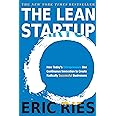
This book was a pleasure to read. It was concise, practical and very easy to navigate with plenty of real world examples to keep the concepts relevant and interesting. The short chapters each take an individual theme, normally eye opening concepts that overarch much of start ups, businesses and the future. Peter Thiel is as successful as entrepreneurs come, having been a member of the paypal mafia, sold multiple multi-billion dollar companies and subsequently invested in thousands through his fund. His wide experience is articulated through the concepts provided.I particularly enjoyed the themes of irrationality that are rife in Venture Capital, with VCs following formulas irrespective of the outcomes. Thiel describes how there is a long tail effect in the return on investments where by the top returners come extremely rarely and when it comes to portfolio management investors should focus on a very select few. Contrary to this, investors opt for risk mitigation by creating portfolios, in the knowledge that 9/10 of these will be loss making in the hunt for the 10% and in doing so lose out. He also reflects on the dot.com, green tech and housing bubbles.I was expecting this book to be a page turner and something I will refer to in the future and I was not disappointed. For aspiring entrepreneurs, self-starters and self proclaiming visionaries I highly recommend it and put it in the same league as ‘The Lean Start Up’ by Eric Ries and ‘Four Hour Work Week’ by Tim Ferris.
R**D
Superb book that I finished in two days
I am an avid reader but even then I don't finish books this quickly. However, I couldn't put this book down and read over Saturday and Sunday (night got in the way else I would have finished in one sitting).I got interested in Peter Thiel's thinking after watching his Stanford lecture "Competition is for Losers" (check out YouTube). It's immaterial whether you agree with Peter's thinking, his political views etc..This is a mind-expanding book that makes very good arguments against well-established and accepted theories. E.g.go after small markets, monopoly is better, competition is bad (and explains why) .We often take things on face value without questioning coz that's how they are taught to us. As I grow old, I think of of the other side of the coin and this book does that job very well.I highly recommend this book and I am glad I got a paperback copy of this. It is one of my favourite books now.Try it and you will learn something from it. Isn't that why we read ? :)
Trustpilot
Hace 1 semana
Hace 2 semanas