We remain fully operational. Our teams are working around the clock to ensure your deliveries continue safely.

Descargar la aplicación


Servicios al cliente
Sobre nosotros
Copyright © 2025 Desertcart Holdings Limited
Descargar la aplicación
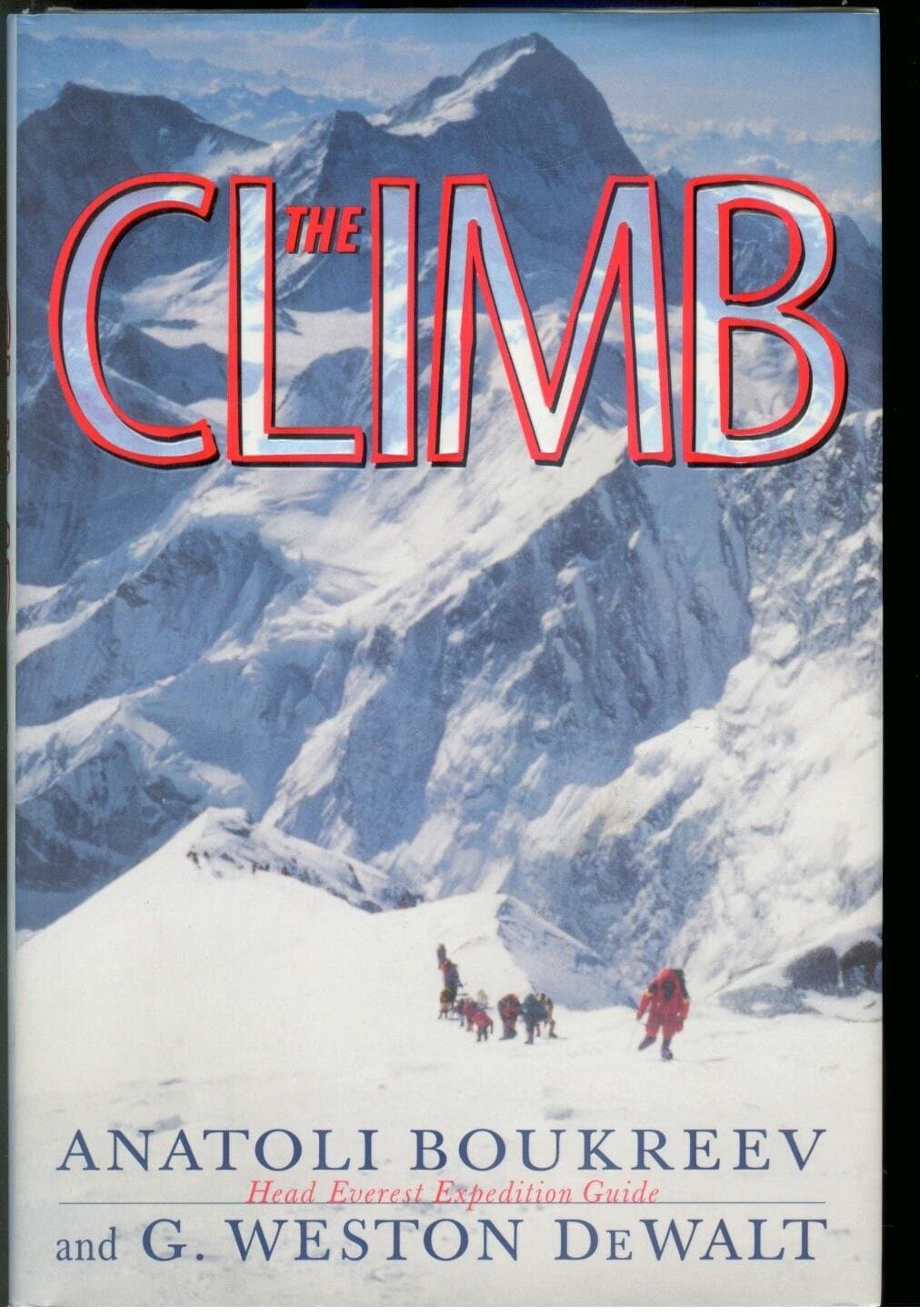
The Climb: Tragic Ambitions on Everest [Boukreev, Anatoli, Dewalt, G. Weston] on desertcart.com. *FREE* shipping on qualifying offers. The Climb: Tragic Ambitions on Everest Review: Do NOT read right after Into Thin Air - This is a great book, but you have to be in the right headspace to enjoy it. When I first purchased this book, it was right after reading Into Thin Air. Jon Krakauer is a masterful writer who seamlessly paints vivid scenes with smooth execution and flowery soliloquy. After reading his work for awhile, I got accustomed and spoiled. Anatoli’s personal recollections in his second language and Weston DeWalt‘s explanations are *much* more literal, blunt and to the point. It does provide an excellent perspective of the events, but you should not go into it expecting Krakauer’s level of detail and smooth transitions. When I first started reading it after Into Thin Air it felt so “clunky” that I couldn’t continue. And I think this side effect has had a negative impact on the overall review of this book. Now that it’s been a few months and I’m back to reading it again, I feel that it is well written in its own way and I can appreciate it much more. It’s definitely worth the read to get Anatoli’s perspective. He was truly a hero. Review: Excellent account of the 1996 premonsoon season - I have read almost all of the published accounts of this tragic season and found Boukreev's to be the most detailed and honest of the bunch. Like most of us, I first read Krakauer's "Into Thin Air" and was appalled at Anatoli's behavior as described by the author. I still agree with Krakauer that Boukreev should not have attacked the mountain in the manner in which he did (ahead of all the clients) but it's VERY evident from reading other accounts about this disaster that Anatoli was doing what he believed he should be doing. When I first began reading "The Climb", it felt like somewhat of a rebuttal to "Into Thin Air" and it's evident that there are passages throughout the book that are meant to defend against statements made in Krakauer's account. In fact, I firmly believed I would not like the book because of Krakauer's interpretation of Boukreev's behavior on the mountain. After completing this book, I re-read Krakauer's book and felt that his criticisms of Boukreev were a bit harsh, particularly harping on Anatoli's choice to not use oxygen. Most formidable high-altitude mountain guides DO use oxygen when guiding even if they choose not to use when they are climbing for their own pleasure and doctors will tell you that it's ludicrous to believe that one would be better off or even as well off without supplemental oxygen as they would with it; however, most experienced high-altitude mountaineers will also tell you that being on oxygen and running out is WORSE than never having used oxygen at all. Eric Simonson has said that running out of oxygen at high altitude is equivalent to putting your head inside a plastic bag and duct-taping it around your neck. Anatoli always stated that, as a guide using oxygen, he might need to give it up his oxygen (which he did carry) to a needy client which would greatly hinder his ability to guide. Boukreev was one of those rare humans who are physiologically suited for high altitude and besides, at no time did Anatoli's lack of oxygen have any bearing on the way he guided that day. It's evident from reading his book that Boukreev firmly believed if you were on Mt. Everest then you should be capable of climbing it. He was very much against the idea of "babysitting" clients with questionable mountaineering skills up a mountain that they had no business being on. One odd thing about Boukreev is that he was almost like half-Sherpa and half-guide. He assisted with hauling gear to the higher camps and fixed rope in several difficult areas along the route. Krakauer seemed to exaggerate the altercations that Anatoli had with Scott Fischer, however, Krakauer was able to see that Fischer was being affected by the altitude where Boukreev recognizes that Fischer is tired, but still trusts Fischer to make crucial decisions on summit day, the biggest of which was allowing Boukreev to descend ahead of the clients to prepare provisions for the climbers in the event that he needed to head back up the mountain in a rescue effort. Of course, one detail that Krakauer left out or wasn't aware of was that Boukreev believed that the team had NO sherpas left at Camp IV and that someone would need to prepare tea for the exhausted incoming climbers and insure that they got oxygen, hydration, etc. Also, if a rescue from Camp IV were necessary, he needed to rehydrate and rest himself in order to go back up the mountain. As we all know, this is exactly what occurred. So, it may have been flawed thinking, but he BELIEVED that he was doing the right thing and it was agreed upon between he and Fischer that this would be the plan. If he can be faulted at all, it might be for not recognizing that Scott Fischer was probably incapable of making a clear decision in his altitude-affected state. That being said, Scott Fischer was not one to let on that he was hurting and he was Boukreev's boss. Many of us don't question our bosses when we believe they may be making a bad decision. After re-reading "Into Thin Air", I realized that there were big gaps in Krakauer's account, not the least of which is his trek from the top of the Hillary Step to the South Summit without oxygen. In Krakauer's book, he mentions how Andy Harris has turned his oxygen up instead of down like he asked him to do and then he ran out of oxygen. Then he says that the "Step" cleared, he went down and then he goes into his encounter with Andy Harris at the South Summit oxygen cache. In "The Climb", Boukreev tells of how Krakauer nearly fell to his death stumbling across the unroped area along the South ridge in his oxygen-deprived state. Krakauer never makes mention of this and probably because he doesn't remember it. Let's not forget that Krakauer thought Martin Adams was Andy Harris and actually communicated to Base Camp that Harris had safely returned to Camp IV when, in fact, Harris was somewhere around the South Summit. It is my opinion that Krakauer was much more severely affected by the high altitude on that day than Boukreev was and, as a result, I trust Anatoli's memory of the events more than I do that of Krakauer even if "The Climb" was written in rebuttal to "Into Thin Air". It goes without saying that had Anatoli not guided the mountain in the manner which he did, that more people would have died in those days and the altitude-affected recollection of John Krakauer isn't enough to convince me that the opposite is true. One thing that all climbers on that mountain will agree on is that if there is a villain in this tragic story, it was Ian Woodall, leader of the South African expedition.
| Best Sellers Rank | #755,609 in Books ( See Top 100 in Books ) #16 in Mountain Climbing #162 in Traveler & Explorer Biographies |
| Customer Reviews | 4.4 4.4 out of 5 stars (2,112) |
| Dimensions | 6.75 x 1 x 9.75 inches |
| Edition | First Edition |
| ISBN-10 | 0312168144 |
| ISBN-13 | 978-0312168148 |
| Item Weight | 1.3 pounds |
| Language | English |
| Print length | 255 pages |
| Publication date | January 1, 1997 |
| Publisher | St Martins Pr |
E**Y
Do NOT read right after Into Thin Air
This is a great book, but you have to be in the right headspace to enjoy it. When I first purchased this book, it was right after reading Into Thin Air. Jon Krakauer is a masterful writer who seamlessly paints vivid scenes with smooth execution and flowery soliloquy. After reading his work for awhile, I got accustomed and spoiled. Anatoli’s personal recollections in his second language and Weston DeWalt‘s explanations are *much* more literal, blunt and to the point. It does provide an excellent perspective of the events, but you should not go into it expecting Krakauer’s level of detail and smooth transitions. When I first started reading it after Into Thin Air it felt so “clunky” that I couldn’t continue. And I think this side effect has had a negative impact on the overall review of this book. Now that it’s been a few months and I’m back to reading it again, I feel that it is well written in its own way and I can appreciate it much more. It’s definitely worth the read to get Anatoli’s perspective. He was truly a hero.
L**N
Excellent account of the 1996 premonsoon season
I have read almost all of the published accounts of this tragic season and found Boukreev's to be the most detailed and honest of the bunch. Like most of us, I first read Krakauer's "Into Thin Air" and was appalled at Anatoli's behavior as described by the author. I still agree with Krakauer that Boukreev should not have attacked the mountain in the manner in which he did (ahead of all the clients) but it's VERY evident from reading other accounts about this disaster that Anatoli was doing what he believed he should be doing. When I first began reading "The Climb", it felt like somewhat of a rebuttal to "Into Thin Air" and it's evident that there are passages throughout the book that are meant to defend against statements made in Krakauer's account. In fact, I firmly believed I would not like the book because of Krakauer's interpretation of Boukreev's behavior on the mountain. After completing this book, I re-read Krakauer's book and felt that his criticisms of Boukreev were a bit harsh, particularly harping on Anatoli's choice to not use oxygen. Most formidable high-altitude mountain guides DO use oxygen when guiding even if they choose not to use when they are climbing for their own pleasure and doctors will tell you that it's ludicrous to believe that one would be better off or even as well off without supplemental oxygen as they would with it; however, most experienced high-altitude mountaineers will also tell you that being on oxygen and running out is WORSE than never having used oxygen at all. Eric Simonson has said that running out of oxygen at high altitude is equivalent to putting your head inside a plastic bag and duct-taping it around your neck. Anatoli always stated that, as a guide using oxygen, he might need to give it up his oxygen (which he did carry) to a needy client which would greatly hinder his ability to guide. Boukreev was one of those rare humans who are physiologically suited for high altitude and besides, at no time did Anatoli's lack of oxygen have any bearing on the way he guided that day. It's evident from reading his book that Boukreev firmly believed if you were on Mt. Everest then you should be capable of climbing it. He was very much against the idea of "babysitting" clients with questionable mountaineering skills up a mountain that they had no business being on. One odd thing about Boukreev is that he was almost like half-Sherpa and half-guide. He assisted with hauling gear to the higher camps and fixed rope in several difficult areas along the route. Krakauer seemed to exaggerate the altercations that Anatoli had with Scott Fischer, however, Krakauer was able to see that Fischer was being affected by the altitude where Boukreev recognizes that Fischer is tired, but still trusts Fischer to make crucial decisions on summit day, the biggest of which was allowing Boukreev to descend ahead of the clients to prepare provisions for the climbers in the event that he needed to head back up the mountain in a rescue effort. Of course, one detail that Krakauer left out or wasn't aware of was that Boukreev believed that the team had NO sherpas left at Camp IV and that someone would need to prepare tea for the exhausted incoming climbers and insure that they got oxygen, hydration, etc. Also, if a rescue from Camp IV were necessary, he needed to rehydrate and rest himself in order to go back up the mountain. As we all know, this is exactly what occurred. So, it may have been flawed thinking, but he BELIEVED that he was doing the right thing and it was agreed upon between he and Fischer that this would be the plan. If he can be faulted at all, it might be for not recognizing that Scott Fischer was probably incapable of making a clear decision in his altitude-affected state. That being said, Scott Fischer was not one to let on that he was hurting and he was Boukreev's boss. Many of us don't question our bosses when we believe they may be making a bad decision. After re-reading "Into Thin Air", I realized that there were big gaps in Krakauer's account, not the least of which is his trek from the top of the Hillary Step to the South Summit without oxygen. In Krakauer's book, he mentions how Andy Harris has turned his oxygen up instead of down like he asked him to do and then he ran out of oxygen. Then he says that the "Step" cleared, he went down and then he goes into his encounter with Andy Harris at the South Summit oxygen cache. In "The Climb", Boukreev tells of how Krakauer nearly fell to his death stumbling across the unroped area along the South ridge in his oxygen-deprived state. Krakauer never makes mention of this and probably because he doesn't remember it. Let's not forget that Krakauer thought Martin Adams was Andy Harris and actually communicated to Base Camp that Harris had safely returned to Camp IV when, in fact, Harris was somewhere around the South Summit. It is my opinion that Krakauer was much more severely affected by the high altitude on that day than Boukreev was and, as a result, I trust Anatoli's memory of the events more than I do that of Krakauer even if "The Climb" was written in rebuttal to "Into Thin Air". It goes without saying that had Anatoli not guided the mountain in the manner which he did, that more people would have died in those days and the altitude-affected recollection of John Krakauer isn't enough to convince me that the opposite is true. One thing that all climbers on that mountain will agree on is that if there is a villain in this tragic story, it was Ian Woodall, leader of the South African expedition.
J**T
A "Must-Read" for People Interested in the Everest Disaster of 1996
I am currently very interested in the Everest tragedy and as part of that, I am reading as many memoirs of the event as possible. I already knew about the existing conflict between Krakauer’s (Into Thin Air) and Anatoli’s memoir but I wanted to give them both a chance to voice their opinions. I truly loved reading Boukreev’s memoir. He provided an inside look at mountain climbing that I had not been aware of before. The main portion of the book is simply describing events as he remembers them. He doesn’t place blame on anybody for what occurred that day and he doesn’t question that actions of others (like a certain Jerkauer does in his book). It appears that he just wants to have his voice heard and to share his story about what happened. He also wanted to pay tribute to those who lost their lives that day. Scott Fischer and Rob Hall were very important people in the commercialization of mountain climbing and this tragedy affected Boukreev deeply, as well asthe loss of Namba, who Boukreev felt deep personal guilt over. In this version of the book, there are several documents after the book actually ends which are interesting to read. An In Memoriam for Boukreev who passed away in 1997 and a few responses to Krakauer’s book. Krakauer does not come off well in this part. It’s very respectfully done, but to me, Krakauer comes off as kind of like an arrogant baby. What we have to remember with these memoirs, is that it is all memories. At that altitude and given the events of the day, memories can become eschewed. It’s very likely that these men remembered the story differently, but to them, it was the truth. Overall, this was a very interesting read. I loved hearing Boukreev’s perspective on the events and about his experiences both that day and otherwise. He’s not the bad guy, and he felt he was represented in that way and this gave him an opportunity to show that he’s not. He’s responsible for having saved at least 3 people that day. That doesn’t sound like a bad guy to me. If you’re interested in the Everest disaster, this should definitely be one of the memoirs that you check out!
M**N
I got interested in this tragedy while watching the Everest movie. In the movie Anatoli Boukreev was depicted as the most experienced and courageous of all the guides. After reading lots of negative reviews (comparing the book from Krakauer - a journalist and an amateur who was also on the expedition but didn't help anyone even when asked directly) I was even more curious what was really behind all the criticisms. Generally, I prefer accounts of events by a professional rather than an amateur, because professionals simply have more experience and can forsee problems which escape amateurs (and also understand things better). Before addressing criticisms, I liked the book very much. I found it a very captivating read an thought it was fantastic to glimpse into how a professional mountaineer is thinking. The first criticism was the language of this book. I found this criticism really petty and unworty. I mean, seriously? This is an account of true events, not a poetry book. I found nothing much wrong with the English. So he/s a Khazahstani climber and doesn't speak English well. So what? The story is narrated for most part by a native speaker, there is just some of the original dialogue to illustrate the difficulties he had with communication on the mountains. The second criticism of Boukeerev was that he climbed withot oxygen - not true - he took one bottle, but gave it to another guide who needed it badly. The third criticism was that he rushed down the mountain. Would they rather he stayed on the mountain and died? Everyone who was rescued would die if he did that, because no one wanted to help him when he went to rescue other clients. I think his reasoning (clients were running out of oxygen, so he needed to get some) is logical and absolutely correct. He was the fastest after all. I think there are many people who could have done things differently, but not Boukeerev. He was professional througout. I think a lot of these criticisms come from American personality - everyone must speak their language, when buying services, some think they buy their guides life ect. Everest is a huge and dangerous mountain. People who are incapable to climb without fixed ropes or to take care of themselves or carry theor own gear/oxygen should never in the first place be let on the mountain. And hiring a guide doesn't mean he has to die for you. Human life cannot be bought (as a journalist on the expedition obviously thought). Why should a guide be dictated by clients to do things like his clients (with practically no clue what should be done) think it should be done? Bollocks...guides should be listened to. But last of all, I think criticism of Boukeerev is simply wicked and most likely due to him being a foreigner = non English speaking. No American seems to criticised. I find that unfair. Boukeerev was simply considered by some only a sherpa, even though he was the most experienced guide of all three expeditions on the mountain on that day.
G**.
This book provides a much more balanced and reasonable account of what happened on Everest in 1996. I read Krakauer's book first and am so glad I read this one too!!!! Krakauer's book seems to be villainizing people, which is terrible considering that nobody wanted this tragedy to happen. I absolutely loved Anatoli's account and after reading both, this one is just just so much more real and genuine. Anatoli seemed like a great human being and an absolute beast in the mountains! Well written and wonderful read.
O**E
Hélas disparu trop tôt, Boukreev apparaît dans ce livre complètement différent que l'image qu'en veut donner Krakauer....Sa philosophie, sa vision de son sport, son souci de la sécurité, son dévouement envers les autres en fait quelqu'un d'attachant...et de respectable...C'est un héros reconnu puisqu'il a reçu une récompense du Clup Alpin aux USA pour avoir sauvé des vies au péril de la sienne....Son attitude de respect, de regret vis à vis de Scott Ficher ou de Yosuko Namba montre à l'évidence qu'on est loin du personnage dessiné par Krakauer.....Merci à Weston Dewalt d'avoir permis à cet homme de réfuter les accusations mensongères de Krakauer....Sans Boukreev, combien de morts y aurait-il eus? Toutes les décisions prises par lui ce jour là sont bien éclairées, et logiques et avérées dans les faits!
J**D
I've been waiting twenty odd years to read this book - took that long to get to Kindle. Fascinating to finally hear first hand (with assistance from DeWalt) from Anatoli about the ill fated 96 Everest climb. The unedited text from the conversations between the authors gives great insight into boukreevs experience on Everest. He comes across as an honest man, with integrity, and thoroughly dedicated to climbing. Such a shame a shadow remains after the character assassination that Jon Krakauer inflicted on him. The argument between krakauer and DeWalt - that's well documented in the book - is unedifying, remains unresolved (as it will forever!?) and seems ultimately to reflect the egos of krakauer and DeWalt with boukreev the bemused and exasperated bystander.
ブ**ク
和訳本はある図書館の保存倉庫に辛くも残っていた。手許に置きたいが中古本はプレミアム付いて高額かつ入手難。それならこの際英語の原書にチャレンジしてみるかと購入。 時はかなり過ぎ去ったが、エベレストでのこの大量遭難の実話、とりわけブクレーエフの立場からの話に興味を惹かれている。自分にとっては宝になりうる本。
Trustpilot
Hace 3 semanas
Hace 1 mes