We remain fully operational. Our teams are working around the clock to ensure your deliveries continue safely.

Descargar la aplicación


Servicios al cliente
Sobre nosotros
Copyright © 2025 Desertcart Holdings Limited
Descargar la aplicación
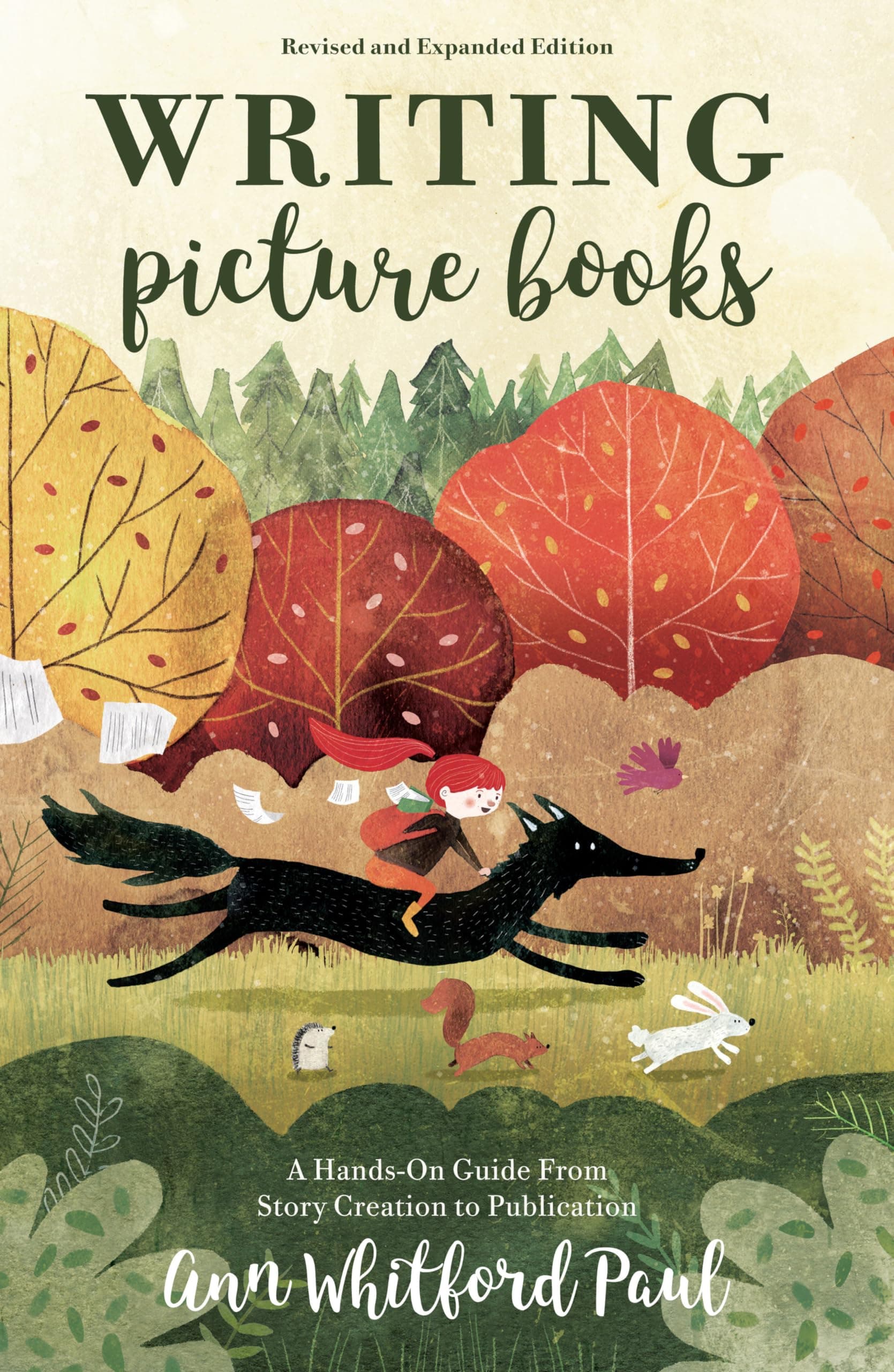
desertcart.com: Writing Picture Books Revised and Expanded Edition: A Hands-On Guide From Story Creation to Publication: 9781440353758: Paul, Ann Whitford: Books Review: Paul Writes with Pictures - Our relationship with picture books runs deep, certainly deeper that can easily be expressed in words. Think about the foods that had special meaning to you when you were young, like watermelon, chicken noodle soup, and chocolate chip cookies. These foods remind me of my grandmother and life on the farm. Later events, places, and people never reached into my soul and touched me so elementally. Introduction Ann Whitford Paul writes, in Writing Picture Books, this statement of objectives: “Picture books are usually read by an adult to a nonreader. To that end, picture books combine words with pictures that entice the nonreader to listen and help her construct meaning from the words. Picture books. Traditionally find an audience in young children. Today, some picture books and graphic novels are published for fluent readers, even adults, but this book will focus on those aimed at children ages two through eight.” (7-8) The ideal manuscript has less than 500 words and fits in the typical 32-page format, focusing on action and dialogue. (8-9) Paul offers twelve tips for writing for children and an additional three tips for the adults who will be reading: 1. Everything is new. 2. Children have had few experiences. 3. Children live in the present. 4. Children have strong emotions. 5. Sometimes childhood is not happy. 6. Children perceive more than we think they do. 7. Children have short attention spans. 8. Children are self-centered. 9. Children long to be independent. 10. Children are complicated. 11. Children have rich imaginations. 12. Almost any topics is okay for a picture book. 13. Language does not have to be babyish. 14. Make books easy to read aloud. 15. Adults are frequently asked to read and reread picture books (10-16). While some of this advice may sound obvious, Paul returns to many of these themes over and over in her guidance. Background and Organization Ann Whitford Paul tells us little about her formal training and work experience. Her website reports: “But I didn’t think about being a children’s book author in middle school or high school or when I studied sociology at Northwestern University and the University of Wisconsin, and earned a master’s degree in social work at Columbia university. I worked as a social worker until my children were born. I was still reading books, only now to my children.” Paul’s website cites only one book for adults, this one, but lists twenty-one children’s books. Because about a third of children under the age of twenty have Hispanic heritage, I find it interesting that she writes a number of books with a bilingual theme or title, such as Mañana Iguana. Being from Los Angeles, I suspect that she is aware of the demographic of childhood today. Paul writes in twenty-five chapters divided into six parts plus voluminous front and back matter: 1. Before You Write Your Story 2. Early Story Decisions 3. The Structure of Your Story 4. The Language of your Story 5. Tying together Loose Ends 6. After Your Story Is Done (v-vi) Paul’s writing is surprisingly precise and covers a number of topics, like a primer on poetry and how to choose a title, that are not typically included in writers’ how-to books. Memorable Moments How do you create whimsy? Although Paul does not mention whimsy, one attribute of children’s literature is a distinctive whimsical tone. Where else do you run across dressed up animals that unremarkably talk? Paul does, however, give us some clues. Paul describes the animals as kids with fur. Animals allow the author to talk about difficult topics, like race relations, without wandering into politically difficult territory or the raises issue, like death, that are scary enough for adults, let alone children. One way that Paul delicately strikes a good tone is through experimenting with alternative voices, some that are not familiar to other genres. Have you heard of apostrophe voice? Paul writes: ”In this voice, the writer speaks to something in the story that can’t speak back.” (40) She writes: “Good morning, toes, Good morning feet, Tangled up between My sheets. Be the first to touch the floor, Hop me to the closet door.” (41) Or how about mask voice, where “the narrator becomes an inanimate object, like a tree, desk, or bed, and tells the story from that object’s point of view.” (42) Clearly, to write for children, you need to enter a child’s world. Assessment Ann Whitford Paul’s Writing Picture Books is an interesting book on the craft of writing children’s books. While I turned to this book as I approached my own children’s book writing project, this is a book worthy of being read by authors in other genres. Why? This is a book that will stretch you as a writer and you may be surprised to find that you enjoy it, just for the reading. I certainly did. Review: Hands On Guide to Writing Picture Books - Now that I am a grandmother, I find myself fascinated with picture books. Hence, I wanted to know more about them. So, I turned to Ann Whitford Paul’s Writing picture books. I learned a lot about this genre and now have a new respect for picture book authors. Ms. Paul provides a hands-on approach to the process of picture books. She dispels the stereotype that picture books are easy to write. I enjoyed this informative text with an ample quantity of examples, lists of resources, and writing prompts that help readers understand the entire process of creating a picture book. It opens one’s creative horizons and challenges for a writer to condense the aspects of a captivating story within the construct of 32 pages. It is a great resource to have in your library whether you are a writer or just one on a quest to understand the different genres of literature. Nice job, Ms. Paul.

| Best Sellers Rank | #29,087 in Books ( See Top 100 in Books ) #13 in Authorship Reference #14 in Creative Writing Composition #29 in Words, Language & Grammar Reference |
| Customer Reviews | 4.7 4.7 out of 5 stars (846) |
| Dimensions | 5.51 x 0.75 x 8.43 inches |
| Edition | Second Edition, Revised |
| ISBN-10 | 1440353751 |
| ISBN-13 | 978-1440353758 |
| Item Weight | 10 ounces |
| Language | English |
| Print length | 272 pages |
| Publication date | November 13, 2018 |
| Publisher | Writer's Digest Books |
S**ﻦ
Paul Writes with Pictures
Our relationship with picture books runs deep, certainly deeper that can easily be expressed in words. Think about the foods that had special meaning to you when you were young, like watermelon, chicken noodle soup, and chocolate chip cookies. These foods remind me of my grandmother and life on the farm. Later events, places, and people never reached into my soul and touched me so elementally. Introduction Ann Whitford Paul writes, in Writing Picture Books, this statement of objectives: “Picture books are usually read by an adult to a nonreader. To that end, picture books combine words with pictures that entice the nonreader to listen and help her construct meaning from the words. Picture books. Traditionally find an audience in young children. Today, some picture books and graphic novels are published for fluent readers, even adults, but this book will focus on those aimed at children ages two through eight.” (7-8) The ideal manuscript has less than 500 words and fits in the typical 32-page format, focusing on action and dialogue. (8-9) Paul offers twelve tips for writing for children and an additional three tips for the adults who will be reading: 1. Everything is new. 2. Children have had few experiences. 3. Children live in the present. 4. Children have strong emotions. 5. Sometimes childhood is not happy. 6. Children perceive more than we think they do. 7. Children have short attention spans. 8. Children are self-centered. 9. Children long to be independent. 10. Children are complicated. 11. Children have rich imaginations. 12. Almost any topics is okay for a picture book. 13. Language does not have to be babyish. 14. Make books easy to read aloud. 15. Adults are frequently asked to read and reread picture books (10-16). While some of this advice may sound obvious, Paul returns to many of these themes over and over in her guidance. Background and Organization Ann Whitford Paul tells us little about her formal training and work experience. Her website reports: “But I didn’t think about being a children’s book author in middle school or high school or when I studied sociology at Northwestern University and the University of Wisconsin, and earned a master’s degree in social work at Columbia university. I worked as a social worker until my children were born. I was still reading books, only now to my children.” Paul’s website cites only one book for adults, this one, but lists twenty-one children’s books. Because about a third of children under the age of twenty have Hispanic heritage, I find it interesting that she writes a number of books with a bilingual theme or title, such as Mañana Iguana. Being from Los Angeles, I suspect that she is aware of the demographic of childhood today. Paul writes in twenty-five chapters divided into six parts plus voluminous front and back matter: 1. Before You Write Your Story 2. Early Story Decisions 3. The Structure of Your Story 4. The Language of your Story 5. Tying together Loose Ends 6. After Your Story Is Done (v-vi) Paul’s writing is surprisingly precise and covers a number of topics, like a primer on poetry and how to choose a title, that are not typically included in writers’ how-to books. Memorable Moments How do you create whimsy? Although Paul does not mention whimsy, one attribute of children’s literature is a distinctive whimsical tone. Where else do you run across dressed up animals that unremarkably talk? Paul does, however, give us some clues. Paul describes the animals as kids with fur. Animals allow the author to talk about difficult topics, like race relations, without wandering into politically difficult territory or the raises issue, like death, that are scary enough for adults, let alone children. One way that Paul delicately strikes a good tone is through experimenting with alternative voices, some that are not familiar to other genres. Have you heard of apostrophe voice? Paul writes: ”In this voice, the writer speaks to something in the story that can’t speak back.” (40) She writes: “Good morning, toes, Good morning feet, Tangled up between My sheets. Be the first to touch the floor, Hop me to the closet door.” (41) Or how about mask voice, where “the narrator becomes an inanimate object, like a tree, desk, or bed, and tells the story from that object’s point of view.” (42) Clearly, to write for children, you need to enter a child’s world. Assessment Ann Whitford Paul’s Writing Picture Books is an interesting book on the craft of writing children’s books. While I turned to this book as I approached my own children’s book writing project, this is a book worthy of being read by authors in other genres. Why? This is a book that will stretch you as a writer and you may be surprised to find that you enjoy it, just for the reading. I certainly did.
B**L
Hands On Guide to Writing Picture Books
Now that I am a grandmother, I find myself fascinated with picture books. Hence, I wanted to know more about them. So, I turned to Ann Whitford Paul’s Writing picture books. I learned a lot about this genre and now have a new respect for picture book authors. Ms. Paul provides a hands-on approach to the process of picture books. She dispels the stereotype that picture books are easy to write. I enjoyed this informative text with an ample quantity of examples, lists of resources, and writing prompts that help readers understand the entire process of creating a picture book. It opens one’s creative horizons and challenges for a writer to condense the aspects of a captivating story within the construct of 32 pages. It is a great resource to have in your library whether you are a writer or just one on a quest to understand the different genres of literature. Nice job, Ms. Paul.
S**N
All your future children writing classes: in one book
I was looking for a book to help me make my children book ideas come true and when I first read this at a bookstore it became really apparent that this author not only knew what she was talking about but she expressed it in a clear way. There are reading assignments and homework after each chapter to help you know what modern children books are like and what makes them good or bad. There are topics from what kind of age range yore trying to reach, how many words your book should have for that age range, what words to avoid, how to reach out to publishers, etc. After each chapter, I found myself going back to my draft to improve it in some way. At first, I borrowed this book from the library but I realized that there was going to be numerous notes and I would need to look back on and refer to so I just bought a copy. If you're thinking of getting a book to help you write children's book, I highly recommend this!
M**G
GOOD BOOK - get a higher pair of higher power reading glasses to read printed book.
I AM LOVING THIS BOOK ... but one complaint. WHY IS THE TEXT SO TEENIE TINY? Headlines are 14-18 pt, but the guts of the reading is at best 10 pt but looks like 8. It takes a special pair of reading glasses (1.5-2.0) for us old folks (over 60) to read. So I succumbed to buying the kindle version -- that means Ann - You got 2 books out of me.
G**N
This book is absolutely everything!
All i can say is (((wow))). When my head started hurting, while I was reading, i knew i had the right book. I was challenged and made to think. You cannot help but to highlight, underline, circle or mark in this book! This author is so generous with her knowledge and added information. She holds nothing back. She puts it all all the table with openness, love, and care. This book comes across as if she actually wants you to succeed! She's gentle and I felt like she was my mentor walking me through the process. So easy to read and understand. There were moments when i wished I could pick up a phone, call her, and ask question about my writing! Lol It is obvious that love, care, blood, sweat and tears definitely went into this book. It was exactly what I needed especially as a writer who finally decided to get off her butt and write the books that's inside of her. I felt encouraged and inspired. So much so that I purchased some of her her books, and some of the recommended books! This is a must read, and should be on your shelf to reference. You will read and re-read it lol. I'm forever grateful.
K**N
Writing Picture Books
Extremely helpful to writers wanting to improve their craft!
A**E
piring aspiring writers.
Great for inspiring aspiring writers. (From a retired elementary school librarian!)
M**R
Helpful in creative writing for children.
Very helpful.
ハ**ム
プレゼントで買いましたが 満足してもらえたようです。
A**E
Libro fantastico. Utile per gli aspiranti scrittori di albi illustrati per bambini, con tante informazioni utili ed esercizi da fare per mettere in pratica ciò che si è appreso.
V**M
Seriously this book makes a great impact in understanding on all the how to write...it's well structured and we'll explained...
M**A
Great book!
C**E
Estava em dúvidas sobre o conteúdo e fui superendido com o oásis de instruções. Como uma mestra que pega o aluno pela mão e o guia em sua jornada de aprendizado. Se pudesse dar 10 estrelas daria. Nota máxima. Valeu a pena a aquisição.
Trustpilot
Hace 2 meses
Hace 1 mes