

Buy anything from 5,000+ international stores. One checkout price. No surprise fees. Join 2M+ shoppers on Desertcart.
Desertcart purchases this item on your behalf and handles shipping, customs, and support to Bolivia.
๐ Upgrade your ride with Bosch precision โ because your engine deserves the best!
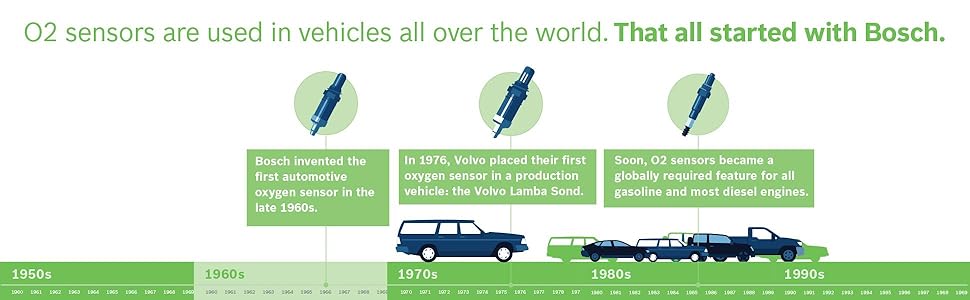
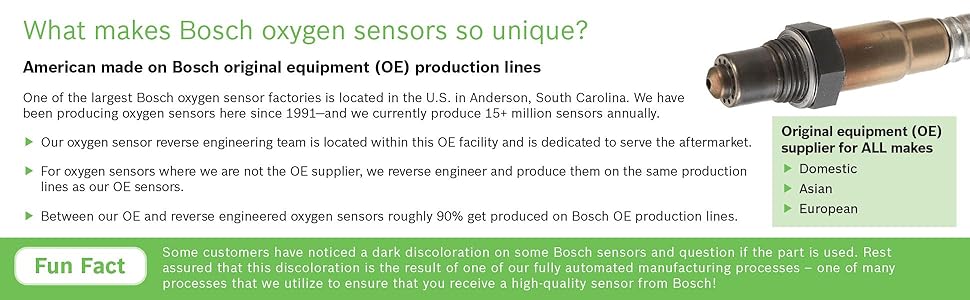
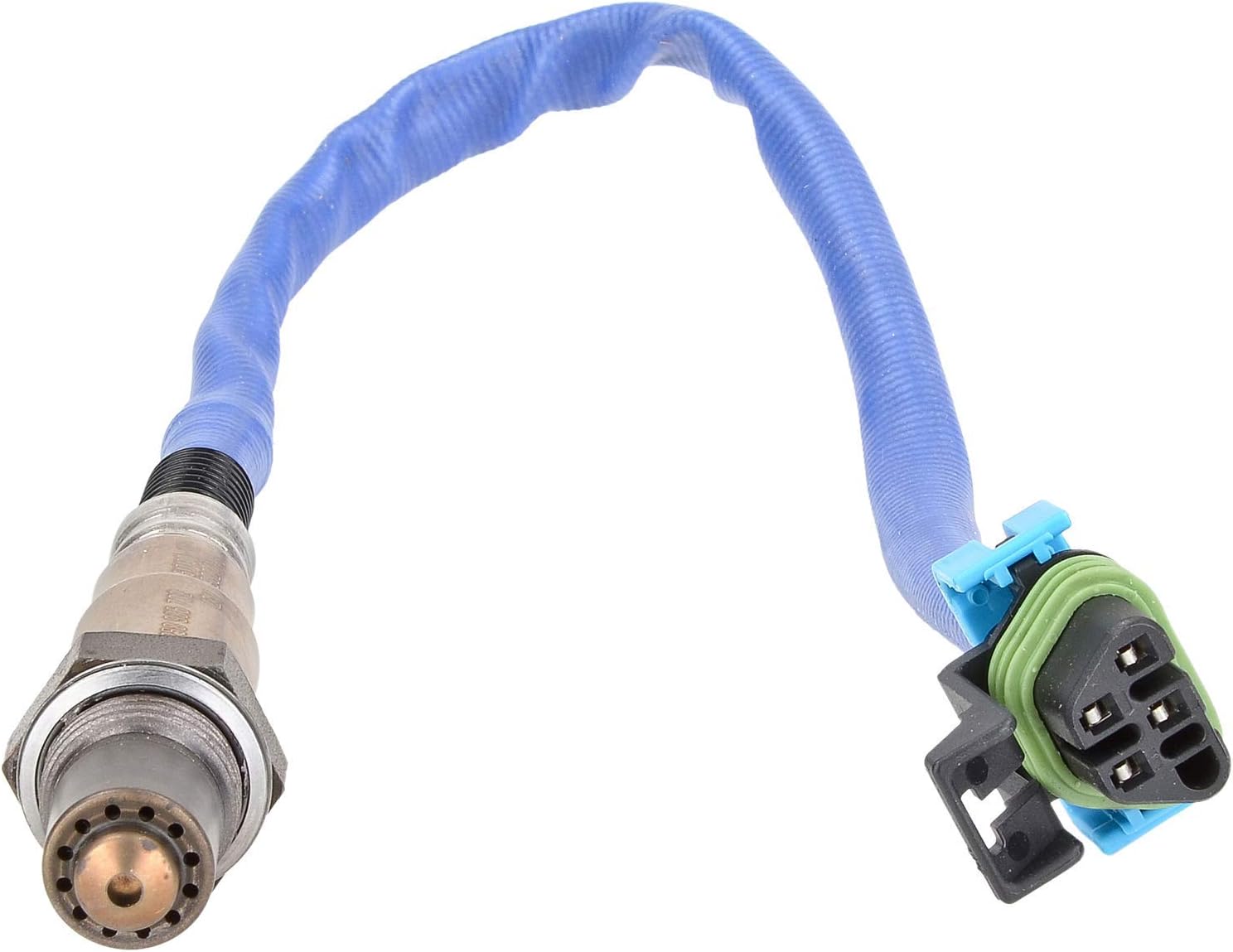
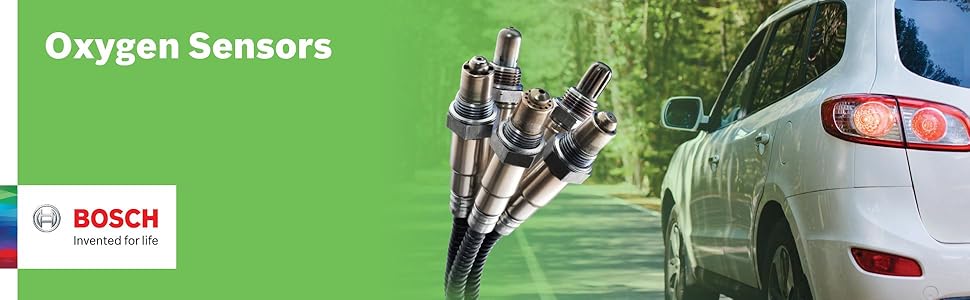
The Bosch 16089 Premium Oxygen Sensor combines over five decades of Bosch innovation with advanced manufacturing techniques, including a double laser-welded stainless steel body and fast-acting heater technology. Factory-tested for flawless performance, it ensures quicker sensor activation and longer service life. Designed as a true direct-fit replacement with anti-seize coated threads, it guarantees a seamless, hassle-free installation for select Buick, Chevrolet, GMC, and Saturn models.


| Brand | Bosch |
| Item dimensions L x W x H | 2.2 x 1.97 x 5.83 inches |
| Material | Stainless Steel |
| Item Weight | 2.4 ounces |
| Style | Oxygen Sensor |
| Mounting Type | Flange Mount |
| Output Type | Digital |
| Specific Uses For Product | Oxygen Sensor |
| UPC | 028851160896 |
| Global Trade Identification Number | 00028851160896 |
| Manufacturer | Bosch |
| Product Dimensions | 2.2 x 1.97 x 5.83 inches |
| Item model number | 16089 |
| Manufacturer Part Number | 16089 |
| OEM Part Number | 12616125 |
T**M
Affordable and easy install
My son's 2004 Toyota Tundra with a 4.3L V-8 has had a "check engine" light on for the past few weeks. I finally got around to reading the code and it indicated it was the Bank 1, position 1 O2 sensor. This part was affordable on Amazon and an easy install once I was able to remove the old sensor. The O2 sensor is crammed up along the engine block and the exhaust with only room for 1 hand. I didn't note exactly how long it took me to remove the old one but it was at least 4 hours. 3.5 hours was spent cussing and swearing and trying to get my other hand up from the front of the axle through a small opening. Once I had two hands from different directions, I was able to unplug the sensor and used an O2 socket to remove it from the exhaust. I was surprised that it came right out with little effort. The new sensor, already coated with some antiseize lube, screwed right in and I had to use two hands again from opposite directions to align and snap the connectors together. Bank 1, position 1 appears to be the hardest to reach of the 4 O2 sensors. I cleared the engine code and the "check engine" light is out. Hands are pretty well scuffed up.
E**O
Plugged right in and solved my problem
Solved my check engine light (P0430 code - catalyst efficiency) on a 4 cylinder (2afze engine) 2002 Camry. I recently replaced the valve stem seals and prior to this was burning some oil (mostly on start up and on long high speed highway trips). I replaced the old plugs and found they were coked with burned oil, and I assume the oil burning also had negative effects on the catalyst. I was told that the Toyota ECU programming was hair trigger on what may be a marginal catalyst and to try replacing the post cat (Sensor 2 on federal vehicles) first. It's much less expensive than a new cat, and if you replace the cat you probably should replace the O2 sensors anyway.Based on advise from others, I was expecting the old post cat sensor (never touched in 12 years) to be very hard to remove. As it turned out, all I had to do was heat the area around the mounting bung slightly (NOT red hot) with a propane torch (I covered the sensor with a wet paper towel). It came out easily with an ordinary open end wrench.The new sensor came with anti-seize compound already applied. It was very close in length to the original. All I had to do was tighten it and plug in the wiring harness (perfect match). I reset the CEL and haven't seen it since! Normally I stick with OEM parts exclusively but this Bosch seems to be a winner for me.
J**Z
It was what expected
I**A
is not original
item is not original arrived in a with plain box
J**P
Works Great!
After paying out way too much money for the last O2 sensor I had replaced, I knew it could't be too tough to do this myself. The O2 sensor arrived promptly and I set to installing it. Couple things to remember, there are 2 different types of sensors on a Toyota Tundra, I was replacing the Bank 1 - Sensor 1 side, which is the passenger side on the exhaust manifold. Triple check you order the correct sensor. The only tough part of the whole process was having the right tool. There are 2 different O2 sensor wrenches, get the one that looks like a socket with a slit cut down the side, it is the only one that will work in the space. Warm up the truck a little bit, put on your gloves and loosen up the old one, then install the new one. It is as easy as it sounds.
R**K
Great Sensor BUT
The sensor worked fine but the wires were short compared to the stock sensor and I had to remove the plug from the original mounting bracket and zip tie it up after plugging it in.
R**D
Great replacement sensors for my 2003 Sequoia.
Great replacement sensors for my 2003 Sequoia. I'm always a bit leery about ordering electronic parts for my vehicles and finding out they are not actually compatible. All research told me these would work well for my upstream O2 replacements. Bosch has been in the automobile parts business for an extremely long time, and I trust them. One note for the home mechanics, make sure when you pull the old sensors off that the old gasket comes completely off. If any little pieces are left on the exhaust you will get a reoccurring code fault. You might be wise to inspect the exhaust mount area for any debris and clean any rust away with a small wire brush. Any debris may allow external oxygen into the exhaust at the sensor and you will get a exhaust related fault.
R**E
As described, fit truck
Fit perfect, and haven't had a problem yet. The end is not what was on the truck, so I had to splice wires - but that was easy. For some reason, the front and rear oxygen sensors have 2 different plastic clip connections (??). The end that connects to the exhaust is also different. The front has screw in (This one), the rear has 2 bolts. If you replace the resignator, you can't get bolt-on, you have to convert to screw in. So you order the front sensor (which is screw in), cut the plastic clip off, and splice the wires. Not tha bad, but why do they use 2 different platic clips? I assume it's so you buy the new Resinator from Toyota, and pay 4 times more ...
Trustpilot
2 months ago
3 weeks ago