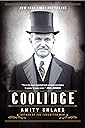

Coolidge
Product ID: 4144887
Desertcart purchases this item on your behalf and handles shipping, customs, and support to Bolivia.
desertcart.com: Coolidge: 9780061967597: Shlaes, Amity: Books Review: A long awaited biography - Those of us who have been fans and students of the life of Calvin Coolidge, and who were enthusiastic readers of Ms Schlaes' last book, The Forgotten Man , have been waiting for this biography for over a year. The publication was delayed and the explanation is that more research was to be done on the economics. It was worth it as this is an excellent companion to the first book. When I first read of Ronald Reagan's placement of the Coolidge portrait in the White House, it was a bit puzzling. The reputation of this president was thoroughly trashed by the Roosevelt era historians like Arthur Schlessinger Jr, whose The Crisis of the Old Order sits in my bookcase behind me as I write this. That was my introduction to Coolidge. The descriptions of him continued in that vein until recently and continue. The 1920s were considered a period of wild speculation and immorality, largely due to Prohibition, but also a reflection of the Republican concerns with "normalcy," a term often ridiculed in my hearing in school. The Depression was considered a sort of retribution for all the fun that everyone had in the 20s. The beginning of a new look at Harding and Coolidge is apparent. Ms Schlaes' last book was a large part of that but there are also academic publications that cast doubt on the Roosevelt success in dealing with the Depression. I was born in the Depression and my parents knew it well. My father was a rabid Democrat and the whole family was horrified when they learned that I cast my first vote for Richard Nixon in 1960. The appreciation of Coolidge came a bit later as I read more history of the 1920s. It was a period of great invention and innovation. The radio and the telephone and the automobile played the role of the internet and cellphone of the Clinton era. Coolidge was an enthusiastic proponent of airplanes and introduced Charles Lindbergh to his future wife, Dwight Morrow's daughter, Ann. Poor Sam Insull made electric appliances universal but lost track of the finances of his company, Commonwealth Edison, and ended up an enemy of the Democrats and persecuted by the Congress. The reputations of so many men suffered as the New Deal made enemies of the rich. Andrew Mellon, Coolidge's Treasury Secretary, was hated by Roosevelt and eventually a "trial" of Mellon and his record of taxes paid was conducted but he was exonerated shortly after his death. He did leave his incomparable art collection to the country and it became The National Gallery. Insull was eventually tried and also acquitted. He died in poverty. Coolidge began the son of a poor but respectable merchant who served in the Vermont legislature and in a number of public offices. The book does an excellent job with his early life and his time at Amherst. He decided to "read law" instead of attending one of the new law schools like Harvard. His friend Dwight Morrow, tried clerking but moved on to the Columbia law school in New York. He qualified for the bar a year early and had to find his own office as the two lawyers who had accepted him as a clerk did not want a partner. His early years, well described here, were rather harsh with economy always necessary. This would be a feature of his life. He did not own a home until after the presidency and he and his wife, Grace, raised their sons in half of a two family house. He slowly ascended the ladder of Massachusetts politics as a party man. The episode that catapulted him to national prominence was the Boston Police Strike and he was quite reserved about his role. He supported the commissioner of police over the mayor who was Democrat and inclined to play politics. Coolidge always had excellent relations with organized labor and tried to find a solution but the police union forced his hand with the strike. When chaos ensued in Boston, he acted. It is an interesting speculation about Ronald Reagan's similar actions with the air traffic controllers' strike. Did he emulate his admired predecessor ? One other thing about the book that is interesting is the obvious lack of a decent biography of Harding. Much of Coolidge's agenda was based on Harding's plans. Mellon was the mastermind of tax policy and showed the first understanding of what would be called "Supply Side" economics in the 1980s. Maybe we will see a proper book about Harding who was so successful in ending the severe recession after World War I. This is an excellent biography and seems to focus on the personal more than the politics. There are other excellent biographies, like Coolidge and the Historians , which seems to have rocketed up in price since I found my copy. Perhaps the new interest in Coolidge has had an effect. Perhaps a reprint will become available. The endnotes of the Schlaes book also suggests some other biographies. Why Coolidge Matters: How Civility in Politics Can Bring a Nation Together is another valuable book and there is yet another biography coming out next month with the same title, Why Coolidge Matters: Leadership Lessons from America's Most Underrated President . You will read negative reviews but they are mostly from political enemies who want the lessons from Coolidge unlearned. Buy this book and you won't regret it. Review: The President Ronald Reagan Wanted To Be - Amity Shlaes has produced a thorough and thought provoking biography of an overlooked and maligned president that ought to elevate his administration to the ranks of those worthy of study. Calvin Coolidge was a success in every imaginable way. His program of cutting taxes, reducing spending, reducing the debt and charting a new course in foreign relations were all realized. On the economic front, his tax and spending policies were a resounding success, (bringing spending down in absolute terms year-over-year during some of his budget years). With marginal tax rates cut from over 70% to the mid 20% range, federal recepits increased (supply side at work), and the economy boomed. Coolidge worked with Andrew Mellon and General Herbert Lord on his great domestic issues. These were remarkable men, particularly Mellon who probably deserves to be ranked with Hamilton and Chase as brilliant and effective Treasury Secreteries. Mellon's ideal of scientific taxation (what we today call supply side economics) found a fellow-traveler in the president. It worked better than either hoped; driving down mariginal rates provided incentives Mellon foretold spurring a general growth in the economy (with the exception of agriculture). The President met with General Lord every week before his cabinet meetings to pour over the budget and look for items to cut. This produced a budget at the end of Coolidge's Administration that was about where it was in actual dollars when compared to his first budget. He also succeeded in reducing actual spending during some of the years of his Administration. On foreign affairs, Coolidge was successful in terms of instituting his agenda, although his naive belief that war could be outlawed via treaty (the Kellog-Briand Pact) was hopelessly utopian and ignored the lessons of history and the behavior of nation-states from the beginning of time. Still, in the immediate sense of the 1920's, Coolidge helped foster good international relations for the United States. Stick with this book as it is a little slow in the first hundred pages. No fault to Shlaes, it is just the subject of her biograhy was such a figure of probity and rectitude growing up that he didn't have high adventures or even mischief that produces exciting reading. During Coolidge's youth, the author frequently mentions Theodore Roosevelt. The contrast between the two is telling. Roosevelt was such a ball of energy that a successful book just covering his childhood and adolescence (Mornings on Horseback) could be produced. No such engagning tome would be possible of Calivn Coolidge. Yet Shlaes does an admirable job of detailing his childhood, relationship with his father, schooling and early career to build a solid picture of the thinking and practices that formed this personality so well suited to executive action and presidential leadership. This is a very well written and engaging book that will inform the reader as well as give an excellent example of a philosophy of govenrment that has worked well yet is foreign to almost everyone alive today in the United States.
| Best Sellers Rank | #127,018 in Books ( See Top 100 in Books ) #136 in US Presidents #210 in Economic History (Books) #238 in Political Leader Biographies |
| Customer Reviews | 4.3 4.3 out of 5 stars (1,868) |
| Dimensions | 5.31 x 0.95 x 8 inches |
| Edition | Reprint |
| ISBN-10 | 0061967599 |
| ISBN-13 | 978-0061967597 |
| Item Weight | 1 pounds |
| Language | English |
| Print length | 592 pages |
| Publication date | February 4, 2014 |
| Publisher | Harper Perennial |
M**Y
A long awaited biography
Those of us who have been fans and students of the life of Calvin Coolidge, and who were enthusiastic readers of Ms Schlaes' last book, The Forgotten Man , have been waiting for this biography for over a year. The publication was delayed and the explanation is that more research was to be done on the economics. It was worth it as this is an excellent companion to the first book. When I first read of Ronald Reagan's placement of the Coolidge portrait in the White House, it was a bit puzzling. The reputation of this president was thoroughly trashed by the Roosevelt era historians like Arthur Schlessinger Jr, whose The Crisis of the Old Order sits in my bookcase behind me as I write this. That was my introduction to Coolidge. The descriptions of him continued in that vein until recently and continue. The 1920s were considered a period of wild speculation and immorality, largely due to Prohibition, but also a reflection of the Republican concerns with "normalcy," a term often ridiculed in my hearing in school. The Depression was considered a sort of retribution for all the fun that everyone had in the 20s. The beginning of a new look at Harding and Coolidge is apparent. Ms Schlaes' last book was a large part of that but there are also academic publications that cast doubt on the Roosevelt success in dealing with the Depression. I was born in the Depression and my parents knew it well. My father was a rabid Democrat and the whole family was horrified when they learned that I cast my first vote for Richard Nixon in 1960. The appreciation of Coolidge came a bit later as I read more history of the 1920s. It was a period of great invention and innovation. The radio and the telephone and the automobile played the role of the internet and cellphone of the Clinton era. Coolidge was an enthusiastic proponent of airplanes and introduced Charles Lindbergh to his future wife, Dwight Morrow's daughter, Ann. Poor Sam Insull made electric appliances universal but lost track of the finances of his company, Commonwealth Edison, and ended up an enemy of the Democrats and persecuted by the Congress. The reputations of so many men suffered as the New Deal made enemies of the rich. Andrew Mellon, Coolidge's Treasury Secretary, was hated by Roosevelt and eventually a "trial" of Mellon and his record of taxes paid was conducted but he was exonerated shortly after his death. He did leave his incomparable art collection to the country and it became The National Gallery. Insull was eventually tried and also acquitted. He died in poverty. Coolidge began the son of a poor but respectable merchant who served in the Vermont legislature and in a number of public offices. The book does an excellent job with his early life and his time at Amherst. He decided to "read law" instead of attending one of the new law schools like Harvard. His friend Dwight Morrow, tried clerking but moved on to the Columbia law school in New York. He qualified for the bar a year early and had to find his own office as the two lawyers who had accepted him as a clerk did not want a partner. His early years, well described here, were rather harsh with economy always necessary. This would be a feature of his life. He did not own a home until after the presidency and he and his wife, Grace, raised their sons in half of a two family house. He slowly ascended the ladder of Massachusetts politics as a party man. The episode that catapulted him to national prominence was the Boston Police Strike and he was quite reserved about his role. He supported the commissioner of police over the mayor who was Democrat and inclined to play politics. Coolidge always had excellent relations with organized labor and tried to find a solution but the police union forced his hand with the strike. When chaos ensued in Boston, he acted. It is an interesting speculation about Ronald Reagan's similar actions with the air traffic controllers' strike. Did he emulate his admired predecessor ? One other thing about the book that is interesting is the obvious lack of a decent biography of Harding. Much of Coolidge's agenda was based on Harding's plans. Mellon was the mastermind of tax policy and showed the first understanding of what would be called "Supply Side" economics in the 1980s. Maybe we will see a proper book about Harding who was so successful in ending the severe recession after World War I. This is an excellent biography and seems to focus on the personal more than the politics. There are other excellent biographies, like Coolidge and the Historians , which seems to have rocketed up in price since I found my copy. Perhaps the new interest in Coolidge has had an effect. Perhaps a reprint will become available. The endnotes of the Schlaes book also suggests some other biographies. Why Coolidge Matters: How Civility in Politics Can Bring a Nation Together is another valuable book and there is yet another biography coming out next month with the same title, Why Coolidge Matters: Leadership Lessons from America's Most Underrated President . You will read negative reviews but they are mostly from political enemies who want the lessons from Coolidge unlearned. Buy this book and you won't regret it.
W**H
The President Ronald Reagan Wanted To Be
Amity Shlaes has produced a thorough and thought provoking biography of an overlooked and maligned president that ought to elevate his administration to the ranks of those worthy of study. Calvin Coolidge was a success in every imaginable way. His program of cutting taxes, reducing spending, reducing the debt and charting a new course in foreign relations were all realized. On the economic front, his tax and spending policies were a resounding success, (bringing spending down in absolute terms year-over-year during some of his budget years). With marginal tax rates cut from over 70% to the mid 20% range, federal recepits increased (supply side at work), and the economy boomed. Coolidge worked with Andrew Mellon and General Herbert Lord on his great domestic issues. These were remarkable men, particularly Mellon who probably deserves to be ranked with Hamilton and Chase as brilliant and effective Treasury Secreteries. Mellon's ideal of scientific taxation (what we today call supply side economics) found a fellow-traveler in the president. It worked better than either hoped; driving down mariginal rates provided incentives Mellon foretold spurring a general growth in the economy (with the exception of agriculture). The President met with General Lord every week before his cabinet meetings to pour over the budget and look for items to cut. This produced a budget at the end of Coolidge's Administration that was about where it was in actual dollars when compared to his first budget. He also succeeded in reducing actual spending during some of the years of his Administration. On foreign affairs, Coolidge was successful in terms of instituting his agenda, although his naive belief that war could be outlawed via treaty (the Kellog-Briand Pact) was hopelessly utopian and ignored the lessons of history and the behavior of nation-states from the beginning of time. Still, in the immediate sense of the 1920's, Coolidge helped foster good international relations for the United States. Stick with this book as it is a little slow in the first hundred pages. No fault to Shlaes, it is just the subject of her biograhy was such a figure of probity and rectitude growing up that he didn't have high adventures or even mischief that produces exciting reading. During Coolidge's youth, the author frequently mentions Theodore Roosevelt. The contrast between the two is telling. Roosevelt was such a ball of energy that a successful book just covering his childhood and adolescence (Mornings on Horseback) could be produced. No such engagning tome would be possible of Calivn Coolidge. Yet Shlaes does an admirable job of detailing his childhood, relationship with his father, schooling and early career to build a solid picture of the thinking and practices that formed this personality so well suited to executive action and presidential leadership. This is a very well written and engaging book that will inform the reader as well as give an excellent example of a philosophy of govenrment that has worked well yet is foreign to almost everyone alive today in the United States.
B**.
Been trying for ages to get a copy of this book, and now I finally have a copy of what must be the definitive biography of this underrated president.
K**I
Amity Shlaes nimmt mit dieser umfassenden Biographie eine überfällige Neubewertung von Person und Amtszeit des 30. Präsidenten der USA vor. Von den (überwiegend progressiv orientierten) Historikern weitgehend als "Laissez-faire"-Überbleibsel aus dem 19. Jahrhundert abgetan, wird Coolidge gern die Great Depression zur Last gelegt, wobei die Glanzpunkte seiner Regierungsjahre (ungebrochener, rasanter Wirtschaftsaufschwung mit Breitenwirkung, Senkung von Staatsdefizit und -schulden, nicht-interventionistische Außenpolitik, teils erfolgreiche Bemühungen um eine neue Friedensordnung in Europa) gerne ignoriert werden. Die Person Coolidge wird mit ihren Facetten gut und emphatisch beschrieben. Das Buch ist für alle an amerikanischer Geschichte und Politik interessierten hochinteressant und sehr zugänglich geschrieben.
J**S
El libro es muy interesante. Hay mucha información histórica y politica; sobre todo he disfrutado mucho la oportunidad de conocer más a Calvin Coolidge como persona. Es un libro bastante ameno de leer.
M**N
Calvin Coolidge has been misjudged by historians. He's typically been portrayed as a lucklustre President who was a mere pawn of big business and/or Wall St. His actual record was far more significant but he remained unappreciated by most pundits and historians. One of Coolidge's few fans was Ronald Reagan; it was no accident that Ronald Reagan ordered a Cabinet Room portrait of Harry Truman to be replaced with a portrait of Coolidge. This biography should play a major role in setting the historical rtecord straight and elevating Calvin Coolidge to his rightful place among the top tier of American Presidents. This is a very well written and researched biography of an under appreciated President. It's one of the best political biographies I've read in quite a while. Highly recommended.
D**A
Una biografia completa e documentata un presidente ignorato al di fuori degli stati uniti, sia per ragioni ideologiche sia per una ormai obsoleta visione della grande crisi, di cui venne preso a capro espiatorio nonostante la realtà fosse ben diversa.
Trustpilot
1 month ago
2 weeks ago