Desert Online General Trading LLC
Dubai, United Arab Emirates
Desert Online General Trading LLC
Dubai, United Arab Emirates

Full description not available
T**R
Essential guidance on how to focus on what is most important
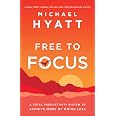
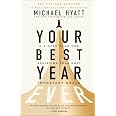
In Free To Focus, Michael Hyatt bridges from goal setting, the subject of Your Best Year Ever (Hyatt, 2018), to goal achievement by helping one focus on what is important, avoid what is not, and truly be productive. He addresses head-on the increasingly difficult problem of staying on task, caused by what he and others call the Distraction Economy. I only have to look at myself and our teenagers using social media and news sites to observe attention deficits strongly in action. (For a comprehensive discussion and solution that focuses primarily on this specific problem, see Digital Minimalism by Cal Newport, 2019).In this well-rounded work, Michael Hyatt addresses not only distraction but also task reduction, prioritization strategies, and practical methods that can be put into use immediately. He has honed these ideas using practical experience and feedback gathered from his online course, Free to Focus, to help a person retain focus and be more effective on working on what is truly important. The book surprisingly starts by having the reader stop everything, re-evaluate their skills and tasks, and then cut out all the things that are consuming time that should be better used elsewhere. This is much easier said than done, so Michael Hyatt lays out a methodical approach on how to achieve this.One of Michael’s greatest skills is taking good research and distilling it into step by step practices and methods, providing enough information for a person to apply it to their own situations. One must not simply read what Michael has written, as an armchair philosopher might do. The benefits of this book are realized by doing the work of the exercises and filling out the worksheets which he provides on the book’s website. Some of this self-evaluation work is not easy, in that it requires hard decisions and honest evaluation of one’s true strengths, distractions, and tasks a person may feel forced to do. This is where creativity and judgment are required to realize benefit. Thankfully the book gives examples and anecdotes of situations most people will relate to, which helps the readers to do this foundational work.Michael’s “Freedom Compass” approach is an excellent method to define what to focus on and what to eliminate or delegate. After completing that matrix, I have a personal description of what I most value and am good at, along with lists what I should not be doing. And I also appreciate the inclusion of a development zone that helps one document areas for personal improvement. I have seen much more comprehensive lists of candidate activities for delegation, but this book provides a good start for one to develop their own list.I recently had a request from someone to help them do a task that would take most of a morning, right when I am typically most productive. I have a hard time saying no, as many others also do, so I turned to the book for guidance. Michael recommends becoming skilled at saying no in a way that affirms the worth of the other person. Using the method in the book, I evaluated the request in terms of my “Freedom Compass” desire zone, and then I responded that I appreciated that they came to me with the request, said that I couldn’t do it because I would have to give up something quite important (related to primary income), but then I offered suggestions for how they might proceed. This is a perfect example of how Michael distilled content from William Ury’s book, The Power of a Positive No, into a form that could be quickly adapted to address a particular situation. The requestor subsequently had a good dialogue with me after my response, which served to strengthen our relationship because we better understood the other’s needs. Afterwards I felt like I exercised an important muscle to safeguard my time, energy, and values. I look forward to continuing to develop and refine the skill of tactfully saying no.Another related forward thinking practice is how to develop a template email response to quickly respond to similar situations, which will save time in the future. Michael gives personal examples and specific implementations he uses for this type of automation, all of which are relevant to common situations encountered by many people.I have been using Michael Hyatt’s Full Focus Planner for about a year now, and find that the Free To Focus book and the planner dovetail quite nicely. The planner contains valuable forms and is periodically improved with feedback from users. How this has helped me is that in the book Michael recommends four habitual practices that he calls daily rituals be defined and performed. This is quite useful, as it has caused me to carefully develop morning and evening habits to reliably take care of the basics needed for my household and personal welfare, and that frees me to reserve activities requiring my sharpest brainpower and energies for creative tasks during the day. This is a very practical approach to allocate and preserve time and energy for the most important activities scheduled during the week, and then to actually be sharply focused on accomplishing those activities when the time comes to do so.I am very appreciative of the templates provided on the book’s website, which are substantially the same as contained in his course. But I have two criticisms of the supplemental materials. The first is that they are in pdf format, which is difficult to work with for capturing one’s ideas in digital form. Second, there are distracting trademark symbols on various phrases in the templates, which thankfully through good editing do not appear in the book. For example, a “not-to-do list” has been described in literature and articles by others for years, so I cannot fathom it being a trademark as it is presented in the form. But these are minor criticisms that can easily be overcome through copy and paste from the pdf forms into an editor to adapt the forms for one’s own use as editable documents. I hope in the future that improved resources are made available, but that should not stop anyone from applying the book now and using what is available on the website.This is a book that was refined via feedback and experience of many of Michael’s students of his course, so it has been in development for some time, and the ideas presented have now been tested, are current, mature, and proven to work. It is also much less expensive than the course was, so the book makes available valuable and practical content to everyone. I appreciate that the book provides useful references as end notes and also an excellent index for quick reference on my phone and computers as a Kindle book. The practical ideas within Free To Focus continue to help me to improve my career path, spend guilt-free time with my family, and help me have the freedom to focus on what is truly important. For that, I am grateful and highly recommend the book.
R**R
I wish I had this information 20 years ago!
Michael Hyatt is a leadership thought leader who understands not only what leaders are struggling with, but has captured a timely and well researched system for each of us to follow in Free to Focus.The author clearly recognizes that information is not enough in today’s world; so he provides actionable strategies with templates, and packages all of that in a well-organized system.This book challenged my beliefs about productivity in a way that completely shifted my thinking forever. I wish I had read this book and could have implemented these strategies 20 years ago!In chapter one, Michael effectively challenges a couple of my status quo beliefs about the true purpose and meaning of productivity. I don’t want to spoil what Michael Hyatt reveals as the true objective for the purpose of productivity, but I found it resonates deeply with me, and it changed my perspective. If that wasn’t enough, he includes a self-assessment tool at the end of the chapter that helped me personally go deeper and to better define my “productivity vision” and distill it down to three key words- very powerful!Chapter one focuses on helping the reader more clearly define his or her vision, and chapter two builds on that in several ways, including a walk through the seven most limiting beliefs that many of us may not realize are holding us back, and juxtaposes liberating beliefs that can get us the breakthrough we’ve prayed for.This chapter also closes with two additional exercises to help the reader apply the material to to his or her circumstances. While I can’t say these tools revealed anything new for me, this book makes it abundantly clear that I can make key changes by taking responsibility and thoughtful action.Michael’s thinking around managing time versus managing energy alone (chapter 3), made me realize how wrong I have been in my own thinking around productivity, and is worth more than the price of the book for me, and there are several other concepts that I found just as intriguing. In fact, I have changed my thoughts and actions in fundamental areas of my daily practice as a result of chapter 3.My favorite quote comes from chapter 3: “Remember, time is not a renewable resource. It is fixed” You can’t do anything to add a single second to the day. However, energy is renewable.”My approach to sleep and exercise and making time for recreation has been all wrong- prioritizing these areas of our daily lives (and others areas also) can give us more energy to be productive with!Chapter 4 is a must read for those of us who are running on the hamster wheel to nowhere. These exercises will really empower you and improve your perspective!Chapter 5 provides tools to proactively analyze and remake our daily tasks list. I love this tool and the perspective that using it provides!Chapters 6 through 9 build on what is possible with the tools introduced in chapter 5 and 6, and presents additional tools to start tying it all together.I have fully embraced the Free To Focus message and approach; it’s just what I needed. I have changed a lot of my long-held beliefs about getting more done, and I look forward to mastering these principles.I would encourage anyone who is serious about making the most of his or her time on earth, to get #freetofocusbook authored by @michaelhyatt, you won’t regret it!
R**B
Great Encouragement and Practical Advice
I found lots of valuable nuggets throughout Hyatt's latest book. I have always found his books/blogs/etc. to be encouraging and practical, and this book did not disappoint. I liked the way he broke down the steps: stop to decide what you want and where you're going, cut the stuff that takes up time and does not help you accomplish your goals, and design a plan of action. That is obviously an over-simplified explanation, because there is so much more to it. But I really enjoyed the book and will be putting what I learned into action!
Trustpilot
5 days ago
1 month ago