
DOWNLOAD THE APP


Customer Services
Copyright © 2025 Desertcart Holdings Limited
DOWNLOAD THE APP
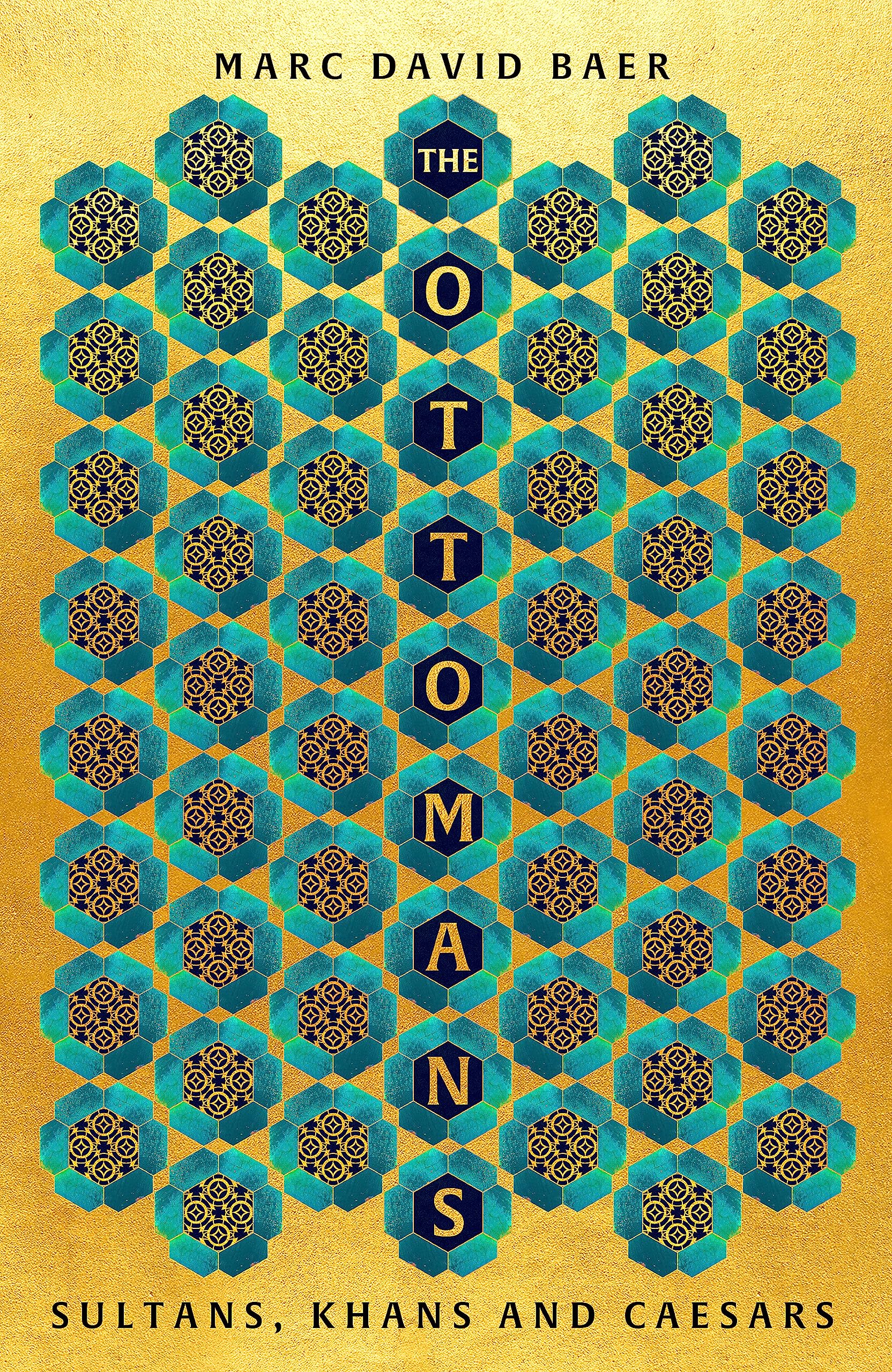
📖 Own the story of empires — don’t just read history, live it!
The Ottomans: Sultans, Khans, and Caesars by Marc David Baer is a highly rated, 730g hardcover book published by John Murray Publishers Ltd. It offers an in-depth exploration of Ottoman history, ranking #62 in Middle East History books and praised for its detailed, authoritative content. Perfect for professionals and history buffs seeking a comprehensive and stylish reference.
| Best Sellers Rank | #85,311 in Books ( See Top 100 in Books ) #62 in History of the Middle East #5,826 in Textbooks & Study Guides |
| Customer Reviews | 4.6 out of 5 stars 258 Reviews |
I**S
Will read again,and good for reference.
Great amount of detail and full of general information, learnt a lot.
C**N
Couverture déchirée
Dommage que la couverture soit déchirée alors qu'il s'agit d'un modèle relié acheté en partie pour son esthétique.
K**A
Highly recommended
Very interesting and insightful, packed with great details. Great storytelling
I**N
Great
Good book. Arrived in perfect condition, no issues or complaints.
F**O
Recommended though some topics need more attention
Marc David Baer’s The Ottomans: Khans, Caesars, and Caliphs provides an enjoyable introduction to the history and culture of the Ottoman Empire. I thought I might be overwhelmed by the many unfamiliar names, but key historical figures stand out—I wasn’t overwhelmed. It helps that the author provides a guide to pronunciation. Also provided are excellent maps, right at the beginning of the book. Too often in other books I stumble across maps after I needed them because there was no in-text citation to guide me to the map. The Ottomans is organized appropriately. We start with the rise of the Ottoman Empire. Then we leave the timeline and cover aspects of Ottoman culture, like the harems and the surprising (to me) prevalence and acceptance of pederasty. Then we return to the timeline to chart the empire’s decline, fall, and replacement with modern Turkey. Overall, The Ottomans is a good book, but there is room for a second edition. While well-written, a little editing could tighten things up. There are several cases where a topic is discussed, we move on, the topic comes up again, and the topic is treated as if it was a new topic. At least that’s how the prose reads. This leaves the reader asking, Did I read about this earlier or didn’t I? In a similar vein, we have the following: “The shadow-government … promoted Mustafa Kemal to field marshal, conferring upon him the messianic title of ‘savior’ and the old Ottoman title of gazi, holy warrior. [Next paragraph] Turning his back on Ottoman Muslim nationalism … Mustafa Kemal adopted the title of gazi. …” Books are written by piecing smaller fragments together, but in The Ottomans the pieces are not always well-integrated. More important, The Ottomans only touches on some topics that should be addressed head on, perhaps in their own chapters. There is mention of slavery throughout The Ottomans, but no explanation of how it worked. Once enslaved, was slavery lifelong? (There is one mention of a person being freed.) Was slavery inherited? There are several mentions of rent farms, but no explanation of rent farming. What is it? Was there an ethnic component, with Muslims being the big landowners and non-Muslims peasants? Did the empire expand in part to allow for more rent farms and, therefore, more revenue? There was an interesting means of government in the Ottoman Empire, but it is only mentioned briefly. The church and the state were one, but there was more than one church within the state, so a person would be governed by his or her own church and not someone else’s. How did that work? I don’t know. Overall, The Ottomans is a good book. I learned a lot from it. But The Ottomans left me with some important questions unanswered, so four stars out of five.
Trustpilot
2 months ago
1 week ago
3 days ago
2 months ago