We remain fully operational. Our teams are working around the clock to ensure your deliveries continue safely.

DOWNLOAD THE APP


Customer Services
Copyright © 2025 Desertcart Holdings Limited
DOWNLOAD THE APP
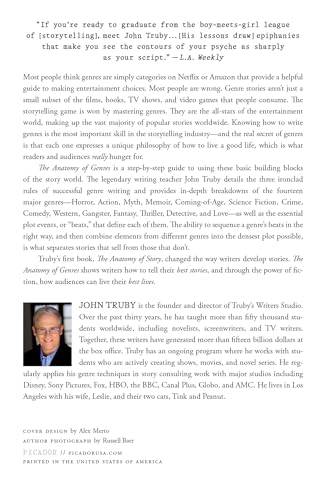
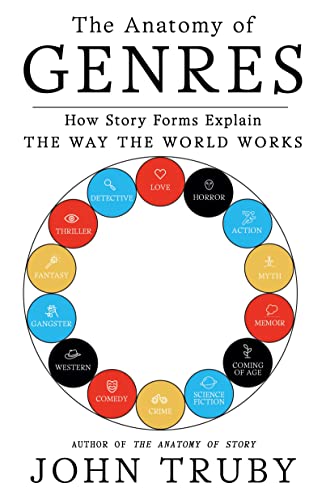


desertcart.com: Anatomy of Genres: 9780374539221: Truby, John: Books Review: Your best writing - and your best life - begin here and now. - Storytellers and story fans rejoice... John Truby's Anatomy of Genre has arrived. The book: A masterpiece, an instant classic, a new gold standard for storycraft, and John Truby's Magnum Opus rolled into one. When a master at the pinnacle of his craft spends this many years pouring himself into one seminal text - this is the magic that happens. John Truby is the global authority on the art and science of story, and his passion leaps forth from every page. I will state this clearly: Anatomy of Genre is the most important book on storycraft, period. (I will expand on the qualifications of my opinion, why it matters, and why you should care below). Let's reflect on story itself. The human animal is a story devouring machine. The stories we read, and watch... the stories we create through choices in our lives. The lessons they teach us of others, ourselves, of the Gods, of right living, the value of love, and how to treat others. Stories of fiction drive our real-life narratives. The most powerful - and dangerous - weapon in the world is no missile nor bomb. It is the craft of story, capable of changing hearts and minds to achieve, for better or worse, whatever ends the author dictates. Thus, an exploration of story is no mere exercise in the nuts and bolts of a neat hobby. It is honing the craft of an artform capable of profound effects not only at the personal level - but the global level as well. Anatomy of Genre fully illuminates the pathways for accomplishing this enormous task. And while the depth of this feat, through the lens of fourteen decoded and hierarchically ranked genres, is impressive - more impressive yet is the book's breadth, scope, and scale. This is the A-Z of storycraft, with each element brilliantly analyzed, executed, and critiqued in minute detail. For the first time ever in storytelling, a Grand Unifying Theory has been established. Story itself is so vast a discipline it has proven impossible for one body of work - let alone even one professor - to wrap there arms around "all of it". Even our most celebrated genre writers typically stay within form - there's simply too much knowledge to acquire to execute them all. Until now. Anatomy of Genre is the E = mc2 of storytelling: a lodestone upon which story, in its endless variations and forms, can be anchored, quantified, measured, and assessed. John Truby has provided the modern storyteller a Rosetta Stone. This large book, based on the grand scope of the fourteen genres examined, is incredibly tight, succinct, and densely packed. There's more than an MFA's worth of knowledge within, and the value here is tremendous: other publishers would have made Anatomy of Genre a fourteen-book series, padding each genre out with ultimately derivitive examples to reach a pre-determined"publishable" length. Instead of endless Hors d'oeuvres, here we are given a hearty 7 course meal. John Truby has a gift for finding the right example to inform and educate, and those he utilizes are fresh, relevant, and on point. Prepare to discover you're smiling to yourself reminiscing on the stories and films case studied here. How to read for Newcomers: Read the intro, examining the fourteen genres in overview. Then, pick three you deem your favorite. You needn't make a linear march through Anatomy of Genre, while beginning and end are important - the journey is yours to define and discover amidst the genres themselves. Chart your own course through Anatomy of Genre, and prepare to have a blast doing so. Master your three genres, then move onto others. How to read for Professionals: Anatomy of Genre is mandatory reading for those with a career in storytelling - be it page, television, or cinema, for two reasons: 1. The impact, quality, effectiveness, and appeal (both artistic and commercial) of your stories will be supercharged. 2. Other storytelling professionals will devour - and apply - these lessons, rendering their skill of the craft to surpass yours. As storytellers we must face a Darwinian truth in our work: the modern reader is limited in time and attention. Every script, book, show, or picture is competing with many others for the chance to be brought to life. Make no mistake: for the modern storyteller, ours is a survival-of-the-fittest industry. AoG will ultimately be the gold standard of storytelling - and thus, those devouring this work immediately will reap the benefits of its first-to-market concepts. The best stories - based on the best storyforms - rise to the surface. AoG deciphers this monumental task. John Truby's book represents a new horizon in storytelling. And like the gold rush itself, the trailblazers will reap the greatest bounty. What this means: the storytelling professional, at any level of the industry, needs to begin their study immediately. It isn't a matter of "if" one should read AoG - only a matter of how soon they begin, the dedicated time/attention given to their study, and immediate application of its techniques to the craft. Your best stories await. And, as John teaches us through the lens of modern philosophy - your best life awaits in turn. This ends my formal review. Go to anatomyofgenre.com Let's roll up our sleeves. And let's get to work. ____ Personal reflections I spent ten years reading hundreds of books researching my 2020 publication of Onward: The Art of Leadership. I saw a real need in the business/leadership field for lessons to be more succinct, and told through the fun and educational lens of historical case studies. Business leadership needed someone to corral its endless lessons, and make them interesting. I dedicated many years of my life to accomplishing this. Then, my focus turned to the techniques of fiction and storycraft. From ancients to moderns, in literature to cinema to stage I invested more years reading them all. And yet again, I discovered what I had in leadership writing: mountains of wandering practices and principles, often redundant and some blatantly wrong. Once again, I found myself hungry to create a piece of work that would bring the best-of-the-best to the study of storycraft. And then I discovered John Truby. Reading his groundbreaking book, The Anatomy of Story, changed my view entirely. The book is so packed with knowledge, each chapter alone offered more instruction than entire volumes from John Truby's contemporaries. The shockingly technical craft of fiction, so elusive and misunderstood, had finally been mastered. John had accomplished the impossible. I began studying John's work in 2018 (Truby.com), through online courses, classes, and his groundbreaking writing software Blockbuster. And while my writing chops vastly improved on the technical front... something profound was happening underneath. John believes, and teaches, in story forms affecting readers - and writers - through the philosophies held within. John was teaching the "limited time" concept, where one must acknowledge how short our lives truly are. How brief, and beautiful... precious, and fleeting are our numbered days. And that this isn't an oppressive viewpoint - but a liberating one. That the time for action is now... to pursue the dreams I aspire to wholeheartedly. I stepped away from a highly prestigious, decorated career to begin the research my great story demanded. It was the boldest professional decision I have ever made. And the best I have as well. I'm on the adventure of a lifetime working on my current project, and it wouldn't have happened without the incredibly inspiring work of John Truby. That future book I was going to write, simplifying fiction and storycraft? I will write no such book. John Truby has accomplished that feat through The Anatomy of Story and The Anatomy of Genre. Storycraft has never been explained more thoroughly, nor with more heart, soul, and passion, than it is here. Nor do I suspect it ever will. Not only better stories - but a better life awaits. It starts here and now with John Truby's Anatomy of Genre. Mark Joseph Huckabee Author - Onward: The Art of Leadership Review: Must read for screenwriters - 5 stars The Anatomy of Genres: How Story Forms Explain the Way the World Works by John Truby is a masterclass in storytelling. Truby, a renowned screenwriter and teacher, has distilled decades of knowledge and experience into this comprehensive guide to writing in all genres. The book is divided into two parts: the first part explores the universal themes and structures that underlie all stories, while the second part delves into the specific conventions of each genre. Truby's analysis is both insightful and practical, and he provides numerous examples from classic films and novels to illustrate his points. One of the things that sets Truby's book apart from other writing guides is his focus on the psychological underpinnings of story. He explains how different genres appeal to different human needs and desires, and how writers can use this knowledge to craft more compelling and effective stories. Another strength of the book is its breadth. Truby covers all major genres, from action and adventure to comedy and romance. This makes the book an invaluable resource for writers of all levels, regardless of their preferred genre. Overall, The Anatomy of Genres is a must-read for any writer who wants to master the art of storytelling. It is a comprehensive, insightful, and practical guide that will help you write better stories in any genre. Here are some specific things that I loved about the book: Truby's writing is clear and engaging, even when he is discussing complex topics. He provides numerous examples from classic films and novels to illustrate his points. His analysis of the psychological underpinnings of story is both insightful and practical. He covers all major genres, from action and adventure to comedy and romance. If you are serious about writing, I highly recommend The Anatomy of Genres. It is a book that I will return to again and again.
| Best Sellers Rank | #31,876 in Books ( See Top 100 in Books ) #3 in 21st Century Literary Criticism (Books) #6 in General Library & Information Sciences #10 in Screenwriting (Books) |
| Customer Reviews | 4.6 4.6 out of 5 stars (583) |
| Dimensions | 5.38 x 1.8 x 8.25 inches |
| ISBN-10 | 0374539227 |
| ISBN-13 | 978-0374539221 |
| Item Weight | 1.16 pounds |
| Language | English |
| Print length | 720 pages |
| Publication date | November 29, 2022 |
| Publisher | Picador Paper |
G**D
Your best writing - and your best life - begin here and now.
Storytellers and story fans rejoice... John Truby's Anatomy of Genre has arrived. The book: A masterpiece, an instant classic, a new gold standard for storycraft, and John Truby's Magnum Opus rolled into one. When a master at the pinnacle of his craft spends this many years pouring himself into one seminal text - this is the magic that happens. John Truby is the global authority on the art and science of story, and his passion leaps forth from every page. I will state this clearly: Anatomy of Genre is the most important book on storycraft, period. (I will expand on the qualifications of my opinion, why it matters, and why you should care below). Let's reflect on story itself. The human animal is a story devouring machine. The stories we read, and watch... the stories we create through choices in our lives. The lessons they teach us of others, ourselves, of the Gods, of right living, the value of love, and how to treat others. Stories of fiction drive our real-life narratives. The most powerful - and dangerous - weapon in the world is no missile nor bomb. It is the craft of story, capable of changing hearts and minds to achieve, for better or worse, whatever ends the author dictates. Thus, an exploration of story is no mere exercise in the nuts and bolts of a neat hobby. It is honing the craft of an artform capable of profound effects not only at the personal level - but the global level as well. Anatomy of Genre fully illuminates the pathways for accomplishing this enormous task. And while the depth of this feat, through the lens of fourteen decoded and hierarchically ranked genres, is impressive - more impressive yet is the book's breadth, scope, and scale. This is the A-Z of storycraft, with each element brilliantly analyzed, executed, and critiqued in minute detail. For the first time ever in storytelling, a Grand Unifying Theory has been established. Story itself is so vast a discipline it has proven impossible for one body of work - let alone even one professor - to wrap there arms around "all of it". Even our most celebrated genre writers typically stay within form - there's simply too much knowledge to acquire to execute them all. Until now. Anatomy of Genre is the E = mc2 of storytelling: a lodestone upon which story, in its endless variations and forms, can be anchored, quantified, measured, and assessed. John Truby has provided the modern storyteller a Rosetta Stone. This large book, based on the grand scope of the fourteen genres examined, is incredibly tight, succinct, and densely packed. There's more than an MFA's worth of knowledge within, and the value here is tremendous: other publishers would have made Anatomy of Genre a fourteen-book series, padding each genre out with ultimately derivitive examples to reach a pre-determined"publishable" length. Instead of endless Hors d'oeuvres, here we are given a hearty 7 course meal. John Truby has a gift for finding the right example to inform and educate, and those he utilizes are fresh, relevant, and on point. Prepare to discover you're smiling to yourself reminiscing on the stories and films case studied here. How to read for Newcomers: Read the intro, examining the fourteen genres in overview. Then, pick three you deem your favorite. You needn't make a linear march through Anatomy of Genre, while beginning and end are important - the journey is yours to define and discover amidst the genres themselves. Chart your own course through Anatomy of Genre, and prepare to have a blast doing so. Master your three genres, then move onto others. How to read for Professionals: Anatomy of Genre is mandatory reading for those with a career in storytelling - be it page, television, or cinema, for two reasons: 1. The impact, quality, effectiveness, and appeal (both artistic and commercial) of your stories will be supercharged. 2. Other storytelling professionals will devour - and apply - these lessons, rendering their skill of the craft to surpass yours. As storytellers we must face a Darwinian truth in our work: the modern reader is limited in time and attention. Every script, book, show, or picture is competing with many others for the chance to be brought to life. Make no mistake: for the modern storyteller, ours is a survival-of-the-fittest industry. AoG will ultimately be the gold standard of storytelling - and thus, those devouring this work immediately will reap the benefits of its first-to-market concepts. The best stories - based on the best storyforms - rise to the surface. AoG deciphers this monumental task. John Truby's book represents a new horizon in storytelling. And like the gold rush itself, the trailblazers will reap the greatest bounty. What this means: the storytelling professional, at any level of the industry, needs to begin their study immediately. It isn't a matter of "if" one should read AoG - only a matter of how soon they begin, the dedicated time/attention given to their study, and immediate application of its techniques to the craft. Your best stories await. And, as John teaches us through the lens of modern philosophy - your best life awaits in turn. This ends my formal review. Go to anatomyofgenre.com Let's roll up our sleeves. And let's get to work. ____ Personal reflections I spent ten years reading hundreds of books researching my 2020 publication of Onward: The Art of Leadership. I saw a real need in the business/leadership field for lessons to be more succinct, and told through the fun and educational lens of historical case studies. Business leadership needed someone to corral its endless lessons, and make them interesting. I dedicated many years of my life to accomplishing this. Then, my focus turned to the techniques of fiction and storycraft. From ancients to moderns, in literature to cinema to stage I invested more years reading them all. And yet again, I discovered what I had in leadership writing: mountains of wandering practices and principles, often redundant and some blatantly wrong. Once again, I found myself hungry to create a piece of work that would bring the best-of-the-best to the study of storycraft. And then I discovered John Truby. Reading his groundbreaking book, The Anatomy of Story, changed my view entirely. The book is so packed with knowledge, each chapter alone offered more instruction than entire volumes from John Truby's contemporaries. The shockingly technical craft of fiction, so elusive and misunderstood, had finally been mastered. John had accomplished the impossible. I began studying John's work in 2018 (Truby.com), through online courses, classes, and his groundbreaking writing software Blockbuster. And while my writing chops vastly improved on the technical front... something profound was happening underneath. John believes, and teaches, in story forms affecting readers - and writers - through the philosophies held within. John was teaching the "limited time" concept, where one must acknowledge how short our lives truly are. How brief, and beautiful... precious, and fleeting are our numbered days. And that this isn't an oppressive viewpoint - but a liberating one. That the time for action is now... to pursue the dreams I aspire to wholeheartedly. I stepped away from a highly prestigious, decorated career to begin the research my great story demanded. It was the boldest professional decision I have ever made. And the best I have as well. I'm on the adventure of a lifetime working on my current project, and it wouldn't have happened without the incredibly inspiring work of John Truby. That future book I was going to write, simplifying fiction and storycraft? I will write no such book. John Truby has accomplished that feat through The Anatomy of Story and The Anatomy of Genre. Storycraft has never been explained more thoroughly, nor with more heart, soul, and passion, than it is here. Nor do I suspect it ever will. Not only better stories - but a better life awaits. It starts here and now with John Truby's Anatomy of Genre. Mark Joseph Huckabee Author - Onward: The Art of Leadership
L**B
Must read for screenwriters
5 stars The Anatomy of Genres: How Story Forms Explain the Way the World Works by John Truby is a masterclass in storytelling. Truby, a renowned screenwriter and teacher, has distilled decades of knowledge and experience into this comprehensive guide to writing in all genres. The book is divided into two parts: the first part explores the universal themes and structures that underlie all stories, while the second part delves into the specific conventions of each genre. Truby's analysis is both insightful and practical, and he provides numerous examples from classic films and novels to illustrate his points. One of the things that sets Truby's book apart from other writing guides is his focus on the psychological underpinnings of story. He explains how different genres appeal to different human needs and desires, and how writers can use this knowledge to craft more compelling and effective stories. Another strength of the book is its breadth. Truby covers all major genres, from action and adventure to comedy and romance. This makes the book an invaluable resource for writers of all levels, regardless of their preferred genre. Overall, The Anatomy of Genres is a must-read for any writer who wants to master the art of storytelling. It is a comprehensive, insightful, and practical guide that will help you write better stories in any genre. Here are some specific things that I loved about the book: Truby's writing is clear and engaging, even when he is discussing complex topics. He provides numerous examples from classic films and novels to illustrate his points. His analysis of the psychological underpinnings of story is both insightful and practical. He covers all major genres, from action and adventure to comedy and romance. If you are serious about writing, I highly recommend The Anatomy of Genres. It is a book that I will return to again and again.
D**9
John Truby has had a huge impact on my understanding of story, and I am deeply grateful for his writings, as well as his lecture series. “The Anatomy of Genres” is yet another fine addition to his work, and I highly recommend it to anyone who seeks a deeper level of understanding of story.
N**N
Loved it! Anatomy of Story, Truby's previous book, is probably the best book on writing ever. But this one completes it with knowledge of genres: what they mean, how they work, and how to use them. Any writer or anybody interested in writing craft/genres should read this book. One criticism I have of the book is that Truby occasionally feels the need to add his political commentary on things. It feels out of place and unnecessary.
S**R
"Anatomy of Genres: How Story Forms Explain the Way the World Works" ist ein faszinierendes Buch, das den Leser auf eine aufregende Reise durch die verschiedenen Genres der Literatur und ihre tiefere Bedeutung mitnimmt. Geschrieben von einem Meister des Erzählens, öffnet es die Türen zu einer neuen Welt des Verständnisses für die Art und Weise, wie Geschichten unsere Welt beeinflussen. Das Buch ist sorgfältig strukturiert und führt den Leser schrittweise durch die verschiedenen Genres wie Roman, Science-Fiction, Fantasy, Krimi und viele andere. Jedes Kapitel widmet sich einem Genre und untersucht seine Merkmale, historischen Hintergründe und erzählerischen Elemente. Dabei wird deutlich, dass Geschichten nicht nur Unterhaltung sind, sondern auch tiefe Einblicke in die menschliche Natur, die Gesellschaft und das menschliche Verhalten bieten. Der Autor präsentiert seine Argumente mit einer beeindruckenden Mischung aus Sachkenntnis und Leidenschaft. Er beleuchtet die verschiedenen Genres aus verschiedenen Blickwinkeln und zeigt auf, wie sie die Art und Weise beeinflusst haben, wie wir die Welt um uns herum wahrnehmen. Von den utopischen Visionen der Science-Fiction bis zu den komplexen moralischen Dilemmata des Kriminalromans - das Buch enthüllt die tiefe Weisheit, die in den verschiedenen Genres steckt. Besonders beeindruckend ist die Art und Weise, wie der Autor historische und kulturelle Einflüsse in die Analyse einbezieht. Er zeigt auf, wie sich die Genres im Laufe der Zeit verändert haben und wie sie die Gesellschaft widerspiegeln. Durch die Betrachtung der Entwicklung von Genres im Kontext von sozialen, politischen und kulturellen Ereignissen wird deutlich, dass Geschichten nicht isoliert von der Welt existieren, sondern eng mit ihr verbunden sind. "Anatomy of Genres" ist ein Buch, das sowohl für Schriftsteller als auch für Leser gleichermaßen inspirierend ist. Es gibt Schriftstellern wertvolle Einblicke in die Mechanismen des Geschichtenerzählens und hilft Lesern, ein tieferes Verständnis für ihre Lieblingsgenres zu entwickeln. Es ermutigt uns, über den bloßen Unterhaltungswert von Geschichten hinauszugehen und die tieferen Botschaften und Bedeutungen zu erkunden. Insgesamt ist "Anatomy of Genres: How Story Forms Explain the Way the World Works" ein bemerkenswertes Buch, das eine neue Perspektive auf Geschichten und ihre Auswirkungen auf die Welt bietet. Mit seiner klaren und zugänglichen Sprache und seinen fundierten Analysen ist es ein Muss für alle, die sich für Literatur und die Kraft der Geschichten interessieren.
C**N
There is no more in-depth text on genres on the market than this one. I tried Save The Cat's archetypal genres, Story Grid's obligatory moments and genre conventions, but never had I gained such a deep and structured understanding. Compared to this, everything I've studied before seems like an elementary level of proficiency, while this book seems like the master's degree in genres to me.
T**X
In combination with Anatomy of the Genre this is number one what the writer needs
Trustpilot
2 months ago
1 month ago