
DOWNLOAD THE APP


Customer Services
Copyright © 2025 Desertcart Holdings Limited
DOWNLOAD THE APP
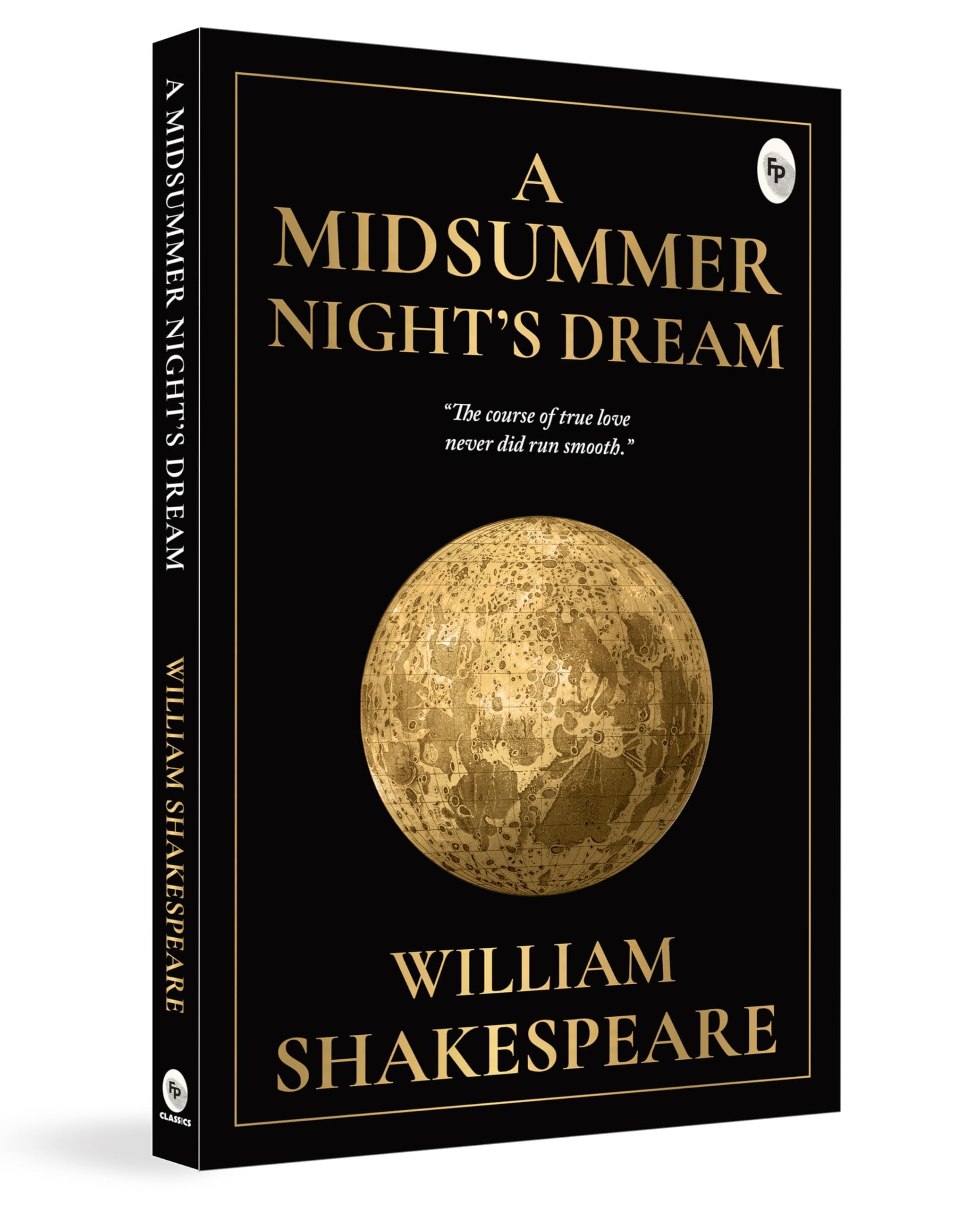
Buy FINGERPRINT with FP logo A Midsummer Night's Dream by William Shakespeare online on desertcart.ae at best prices. ✓ Fast and free shipping ✓ free returns ✓ cash on delivery available on eligible purchase. Review: good - good Review: Most editors are well disposed towards the plays they are asked to edit and Peter Holland is no exception - he tells us that there was no other title he'd have chosen in preference. Not everyone would agree with him about the play's merits, however. His undergraduate friend considered it 'a pappy play', and there have been plenty of other disparaging comments across the centuries. (Famously, Pepys described Dream as 'the most insipid ridiculous play', while for Malone it was unbelievably thin and trite.) After reading this exemplary edition, which reveals much of its full complexity, Dream should not be mistaken for such simple and unsubstantial fare again. Holland begins with a succinct account of modern dream theories, before tackling Classical, medieval and Renaissance views. Particularly interesting is his discussion of treatments of dream in the literature of Shakespeare's contemporaries, where Robert Greene's dismissive stance approximates to that of the rational (but limited) Theseus, while Thomas Lodge's more credulous acceptance of dreams and their mystery aligns him more closely with Hippolyta. The Introduction is astute as well as comprehensive. It observes that doubling the roles of Theseus/Oberon and Hippolyta/Titania has become routine since the 60s, but is critical of those who see this revival of doubling primarily as a solution to financial or pragmatic problems, insisting that it originally had an 'interpretative' function. Holland sees the Elizabethan practice of doubling as a structural device, where 'the audience's recognition of an actor was used to underline the interconnectedness of a series of roles he performed in a play.' Although I'm no historian of critical thought, it seems to me at least that Holland anticipates some of the more influential work of recent scholars. Louis Montrose's study of the Elizabethan theatre's subversion of patriarchal values is hinted at in this edition's Commentary. (See the note on Bottom's apparently innocent use/misuse of the word 'deflowered', p247n, for example.) Equally praiseworthy are the references made to those filmed versions of Dream, like Reinhardt's (1935), that might be considered too dated for extensive, post-Peter Brook discussion. Arden's forthcoming Dream will have a difficult job surpassing its Oxford competitor, first published in 1994. It's just a shame that in the intervening 17 years OUP haven't managed to reference page numbers mentioned in at least three sections of the book: Introduction, Editorial Procedures and Commentary. 'See p000' might suffice at proof stage, but it really isn't good enough so many years on. Peter Holland's informed and constantly illuminating edition deserves better.


| ASIN | 8175994509 |
| Best Sellers Rank | #14,416 in Books ( See Top 100 in Books ) #365 in Classic Literature & Fiction #955 in Literary Fiction #1,653 in Genre Fiction |
| Customer reviews | 4.5 4.5 out of 5 stars (1,634) |
| Dimensions | 19.61 x 1.02 x 12.6 cm |
| Edition | Standard Edition |
| Grade level | 2 - 1 |
| ISBN-10 | 9788175994508 |
| ISBN-13 | 978-8175994508 |
| Item weight | 134 g |
| Language | English |
| Print length | 132 pages |
| Publication date | 1 April 2017 |
| Publisher | Fingerprint! Publishing |
| Reading age | 13 - 17 years |
M**M
good
good
J**S
Most editors are well disposed towards the plays they are asked to edit and Peter Holland is no exception - he tells us that there was no other title he'd have chosen in preference. Not everyone would agree with him about the play's merits, however. His undergraduate friend considered it 'a pappy play', and there have been plenty of other disparaging comments across the centuries. (Famously, Pepys described Dream as 'the most insipid ridiculous play', while for Malone it was unbelievably thin and trite.) After reading this exemplary edition, which reveals much of its full complexity, Dream should not be mistaken for such simple and unsubstantial fare again. Holland begins with a succinct account of modern dream theories, before tackling Classical, medieval and Renaissance views. Particularly interesting is his discussion of treatments of dream in the literature of Shakespeare's contemporaries, where Robert Greene's dismissive stance approximates to that of the rational (but limited) Theseus, while Thomas Lodge's more credulous acceptance of dreams and their mystery aligns him more closely with Hippolyta. The Introduction is astute as well as comprehensive. It observes that doubling the roles of Theseus/Oberon and Hippolyta/Titania has become routine since the 60s, but is critical of those who see this revival of doubling primarily as a solution to financial or pragmatic problems, insisting that it originally had an 'interpretative' function. Holland sees the Elizabethan practice of doubling as a structural device, where 'the audience's recognition of an actor was used to underline the interconnectedness of a series of roles he performed in a play.' Although I'm no historian of critical thought, it seems to me at least that Holland anticipates some of the more influential work of recent scholars. Louis Montrose's study of the Elizabethan theatre's subversion of patriarchal values is hinted at in this edition's Commentary. (See the note on Bottom's apparently innocent use/misuse of the word 'deflowered', p247n, for example.) Equally praiseworthy are the references made to those filmed versions of Dream, like Reinhardt's (1935), that might be considered too dated for extensive, post-Peter Brook discussion. Arden's forthcoming Dream will have a difficult job surpassing its Oxford competitor, first published in 1994. It's just a shame that in the intervening 17 years OUP haven't managed to reference page numbers mentioned in at least three sections of the book: Introduction, Editorial Procedures and Commentary. 'See p000' might suffice at proof stage, but it really isn't good enough so many years on. Peter Holland's informed and constantly illuminating edition deserves better.
ا**ي
👍
B**K
I don't remember this being one of my favourite Shakespeare plays, but I enjoyed re-reading it. It's in his "early" style, so a lot of rhyme within speeches, patterned speeches between the characters and so on; if you prefer the sinewy blank verse of his later style then you might find this one a little saccharine. Also just the right amount of the comic relief characters; sometimes those parts can drag a bit (see Touchstone in As You Like It, for example). The movie with Michelle Pfeiffer & Kevin Kline isn't too bad; has Stanley Tucci as an unexpectedly good Puck (if Tucci has ever been bad in a movie, I haven't seen it; he's even good in those Transformers movies). --Brooke Clark, author of Urbanities
N**A
A perfect edition to make students enjoy the play; a lot of pictures and varied activities to think about the themes and the characters but also the staging and the links one can draw with the role of men/women nowadays... In brief the best edition to fully understand and enjoy the play’s richness!
L**A
Prodotto arrivato come nuovo ma al piccolo prezzo dell'usato. Spedizione rapida e il libro è arrivato ben prima della data prevista. Decisamente soddisfatta!
Trustpilot
1 month ago
1 week ago