We remain fully operational. Our teams are working around the clock to ensure your deliveries continue safely.
DOWNLOAD THE APP


Customer Services
Copyright © 2025 Desertcart Holdings Limited
DOWNLOAD THE APP

🔊 Measure your world with confidence — don’t let noise catch you off guard!
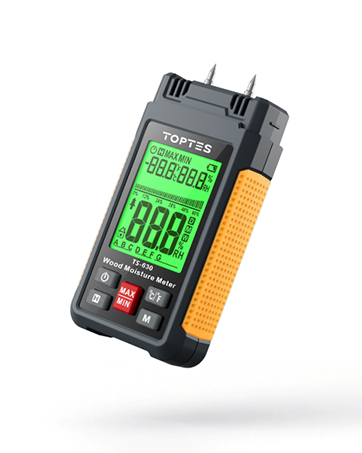
The TopTes TS-501B Decibel Meter is a professional-grade, portable sound level meter featuring a large 2.25-inch backlit LCD for easy reading, precise A/C weighting filters covering 30-130 dB, and max/min data hold capabilities. Designed for both home and industrial environments, it offers reliable accuracy within ±1.5 dB, ergonomic handling, and comes fully equipped with batteries, a carry case, and factory calibration for immediate use.



| ASIN | B0B9BC4N2X |
| Batteries | 3 AAA batteries required. (included) |
| Battery Description | AAA |
| Best Sellers Rank | #1,335 in Industrial & Scientific ( See Top 100 in Industrial & Scientific ) #1 in Sound & Noise Meters |
| Brand | TOPTES |
| Color | Orange |
| Date First Available | November 25, 2022 |
| Item Weight | 5.3 ounces |
| Item model number | TS- 501B |
| Manufacturer | TOPTES |
| Product Dimensions | 2.17 x 0.98 x 5.51 inches |
| Upper Temperature Rating | 50 Degrees Celsius |
D**R
A nice cheap sound level meter with only minor flaws
I bought two different brand/models of sound meter. Since they can be found so cheap it was worth getting a second to compare results. In a room with a background reading of just under 40dB, using the slow update rate, both using the A weighting, this meter is typically within about 1 or 2dB of the other meter when reading but that difference is probably caused by the averaging cycles on two independent meters not having synchronized clocks. Months later that difference did worry me enough that I bought a SPL meter calibrator and found that both this and the other SPL meter I bought are within about 0.2dB of the calibrator specifications using 1kHz at 94dB and 114dB. That's a lot better than this meter's documented accuracy of +/- 1.5dB (that probably is for the whole audio band used rather than specific to a 1kHz tone). However, the calibrator made me confident that this is usable out of the box as a valid SPL meter for me. In testing without a calibrator using the following in-room sounds this meter and the other meter I bought the readings vary within 1dB to 2dB of each other: Ambient sound level Music at a pleasant volume White noise a 10 second 30Hz to 8kHz sweep (covering the documented frequency response) Testing with tone generator at 1kHz that is not the calibrator I bought I also see deltas close enough to 3dB when halving or doubling the output amplitude. Testing with an Android audio signal generator app via a bluetooth speaker that has dedicated filtering for music. Using a 1kHz tone and halving or doubling the amplitude I see a delta on the meter close enough to +/-3dB. Since both meters have a stated accuracy of +/-1.5dB with 0.1dB resolution I'm comfortable with readings from this device. In the C weighting mode the reading from the two meters differ typically by around 6dB using the same sources and peak difference is about 10dB. However, C Weighting passes low-frequency sound below 1kHz that is heavily filteres using A Weigting. So, although the differnce between this and the other meter I bought is pretty severe using C Weighting (typically 4x linear power difference and up to 10x linear power difference between the two meters) I don't think it is representative since I'm not in an environment with significant low frequency noise. I wasn't using sources with high audio power levels, just the same ones as I tested the A weighting with and they may even contribute to the difference I saw between the meters if the audio sources are optimized for human hearing. Of the two meters I bought I suspect from my observations that this model is the more accurate in the C weighting mode so trust this purchase more, but only slightly so. Having used a calibrated signal source and non-calibrated signal sources my observations are that this is delivered as a pre-calibrated, ready to use SPL meter with very good accuracy at 1kHz and decent low frequency accuracy. The live level meter is quite nice, my other meter has a bar meter with lots of bars but is only actually capable of displaying three levels as a stepped scale whereas the bar meter on this is a continuous scale. It would be nicer if I could have the fast/slow display modes apply independently on the bar meter and the numeric dB reading, I'd like a fast bar meter but a slow numeric meter. The fast update mode is 8 times per-second for the displayed dB level on the LCD and is probably great for tuning a stable signal but I have to say I prefer the slow mode with an update per-second due to the less volatile and easier to follow meter number. It's nice that it has a min and max view giving a nicer perspective than my other device which only has a max view. Both have a button to hold the currently displayed level which can be helpful trying to judge the effective level at some point when using the high speed update rate. The LCD display is monochrome on this and color on my other meter but there's not a lot of use for color on a sound meter, other than perhaps the bar meter progressing towards red at high levels which this meter can't do, I prefer the microphone pop filter on my other meter over this where it's quite thin but both meters have the same size (1/2 inch) microphone protrusion I can swap the pop filters over when in use meaning the thinner one on this doesn't matter much to me The meter does quite a good job of filtering out user handling noise but not nearby ambient noise like moving or placing things close to it. It has a nice solid cover for the microphone and pop filter when unused but it always removes the pop filter when I take the cover off, leaving the filter inside the cover. It also has a temperature and humidity display. Thermometer seems accurate enough displaying Fahrenheit but the hygrometer looks like it under-reads others I have at home by 10% and I suspect the hygrometer on this has the error. On the whole I'm happy using it to monitor and compare sound sources I experience.
J**K
Large unit, large screen, simple to use.
Larger than the competitions model. This is helpful because it has a larger screen which is easy to read. Backlit screen is nice, function buttons are clearly marked and raised. Includes 3 AAA batteries, major name brand and not the cheap low life kind. Also included is a soft carry bag for the unit, unfortunately the owners manual can’t be kept in the bag. Owners manual is clearly written, detailed with drawings, written in 6 languages, has QR codes for each language. Only one gripe; there is a large cap cover for the microphone that when removed, where can you put it? Won’t fit on the base, have to put it in your pocket. Also it would be nice to have a color coded card that gives you warnings about decibel levels, safe to dangerous, that can fit in the included case. Otherwise, a good unit.
B**R
Pretty good Decibel meter. Not rechargeable.
This decibel reader seems to work well. Build quality is pretty decent. Large backlit screen is easy to see. It appears to offer accurate decibel reading. I like having this to measure generator noise levels. One improvement that could have been made is to make this rechargeable. But other then that, no real complaints...
G**)
Ignore some of the more critical reviews
I just got it today. After reading some simple things in the manual and online to understand the differences between A and C, it seems pretty straightforward and the device appears to work. I don't have anything else to compare it to like that of some other reviews who would call their comparison a "professional" sound measuring device, but by adjusting the volume of my speakers, as well as the gain and bass levels, the changes seem to be appropriate when it measures the changes in pressure that occur when the bass hits, although I haven't done a bass test with it because I'm in an apartment. So far, I haven't held back on being loud and the highest reading I've gotten for pressure was 113dB across my room, which was much louder than anyone should rightfully have their music, especially in an apartment. For comparison, your average jet engine for a 747 is around 110 dB without applying thrust. Standing nearby a rocket launch which would be closer to 140 dB. The device does not measure hertz, which are the measurement for the frequency of sound waves that will change the pitch rather than the loudness and pressure that decibils measure. I knew this when I purchased the device, but I just wanted to mention that for additional clarity. The product description claims it comes fully calibrated and factory tested for quality assurance. From walking around my house, testing things from my fish tank filter, to music at different levels, my vacuum, and my fridge, they all seemed to be within the expected ranges of what is claimed in the manual. If anything, I think it might read a tad bit on the high side, but I'm no expert. I would say on the fast setting you'll get a variation more like +5 dB or -5 dB from what it probably actually is, depending on what you're listening to. I prefer to use the C setting on Slow, because I feel that shows the most realistic number without drastic spikes. Compared to my thermostat that controls my house, the temp gauge on the device appears to be about 3-4° F higher, and my temp gun (which, in all fairness to the resilient lil' guy, has been dropped in a bucket of water) shows about 2° F higher than the sound device. My temperature gun also shows 2° F higher than what my aquarium heater is set to and it, as it is automatic, is not currently heating. The mercury thermometer I have somehow developed a bubble and is unreadable and I accidentally let my other temp/hygrometer device freeze, so the screen no longer functions. The hygrometer on the sound device seems accurate enough, being as it is dry here and my house is normally not as humid as your typical house, per my previous monitor. I haven't tested it in a humid room, but there isn't much need to unless you're possibly in a humid area, in which case you should use your best judgment as you would with any other electronic device. It feels like it's built well-enough. As with anything in general, but specifically a measuring instrument, you won't want to drop it. The cap that covers the microphone when it's not in use is a snug fit, which is great. However, when you pull them apart be sure that you pull them straight apart from each other. If you open it non-chalantly as you might a stick of deodorant, you may risk breaking your microphone. To hit the Amazon "ideas" for relevancy: it seems to measure noise and pressure levels well. The device has a good size. ~two phones on top of one another, but about the weight of a single phone. LCD screen is easy to read. Backlight on/off function works great. Fast noise levels with A and pressure/loudness levels with C on slow. During your "test" time, you can select the min/Max to give you the highs and lows of your test that you can average out. For around $30, it seems to be good value for money (so far) since higher end sound monitors can apparently run hundreds of dollars, if not more. The package I received wasn't completely sealed, but the item had not been touched. It arrived new. It also comes with a little velvet bag that you can put it in for carrying/storage purposes. Again, as with other electronic devices, any time you intend on storing it for any length of time where it will not be in-use, remove the batteries to avoid any corrosion or potential fire hazards. At best, you get lucky without corrosion, at worst it catches on fire. Better safe than sorry. For any practical purpose it appears as though this is a reliable enough decibel meter that it will be sufficient for 99% of the average consumers. If you're making sure your music isn't breaking any ordinances, checking someone else's noise level (you nosey neighbor, you), or any other thing you find yourself curious about knowing how loud it is, this device should be just fine. If you're aiming for truly professional reading levels and studio purposes, you typically get what you pay for when it comes to any precision measuring device, but I do believe you get a little more in this device than you rightfully should for $30. I compared this to several other devices that were <$30 and I think I would have disappointed with the other devices I was looking at. It does come from China with an impossible address that you'll probably never find, so take that for what it's worth. They do, however, have a support email and they do boast a 3-year warranty for after-sale service and lifetime tech support. I will update this if anything notable changes. I hope this helps somebody.
A**E
安い騒音計の精度はどのくらいか、疑問に思っていたが、B&Kの1/2マイク校正器で計ると、94dBのマイク感度の誤差は0.5 dB以内に収まっていた。感度補正はできないようだが、この程度の誤差なら問題ない。ただし周波数特性や指向特性、リニアリティは調べていないので、気になる人は、ピンクノイズをスピーカから再生させて、iPhoneの騒音計アプリと比べてみるとよいでしょう。
F**O
Acquistato per testare gli impianti AUDIO CAR e devo dire che svolge egregiamente il suo lavoro.
J**G
Een prima geluidsmeter zeker een aanrader.
T**L
Buen aparato al comprarlo de oferta
S**O
I picked up the TopTes TS-501B decibel meter to calibrate my home theater speakers to 75 dB, and it worked absolutely flawlessly. The readings were consistent and spot-on, and the A/C weighting options made it easy to get precise measurements depending on the environment. The 2.25-inch LCD screen is surprisingly large and very easy to read, and the backlight is super helpful in dim lighting. The MAX/MIN function is great for tracking sound fluctuations, and the meter responds quickly to changes. It also comes with three AAA batteries and a nice carrying case, which is a bonus. The low-battery alert is handy too, so you’re never caught off-guard mid-measurement. Overall, this is a reliable and user-friendly decibel meter—perfect not just for home theater work but also for checking noise levels around the house or in the workshop. Highly recommend!
Trustpilot
2 months ago
2 weeks ago